
Bathroom
Brushed Nickel Bathroom Light Fixtures: A Buyer's Guide
Bathroom light fixtures in brushed nickel: vanity bars, sconces and pendants, sizing, damp ratings, matching metals, care in humid Florida bathrooms.
By the Prime Construction team Updated October 13, 2026 6 min read
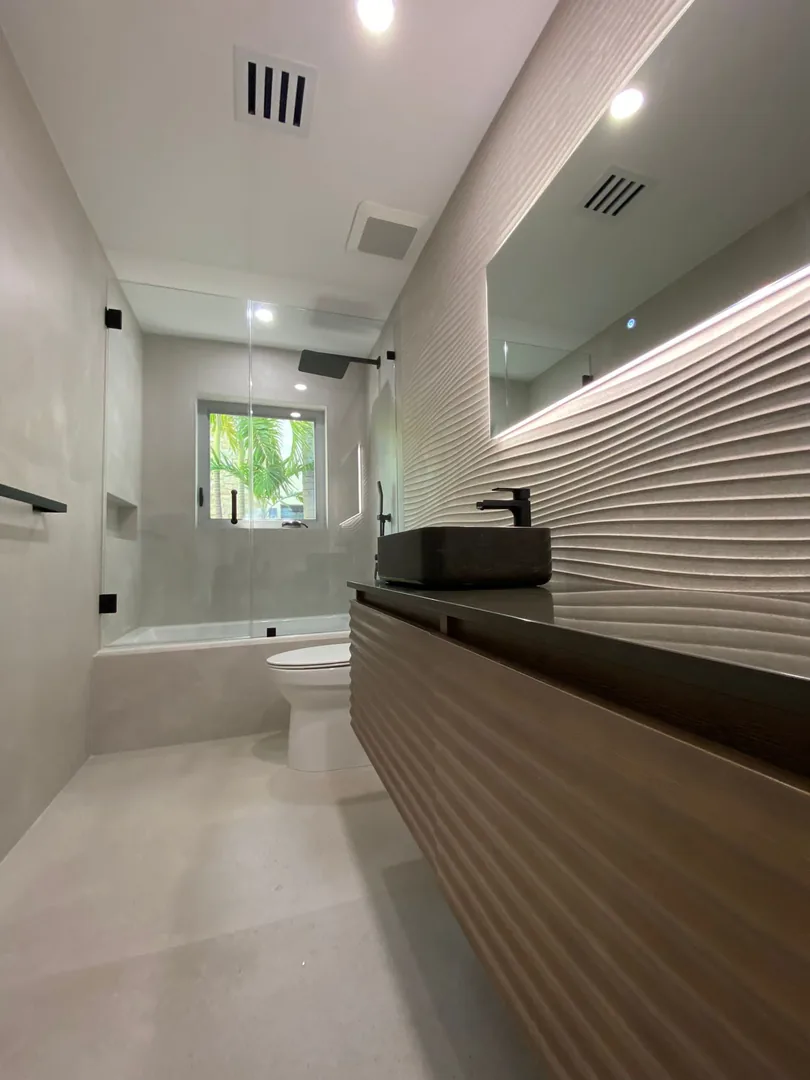
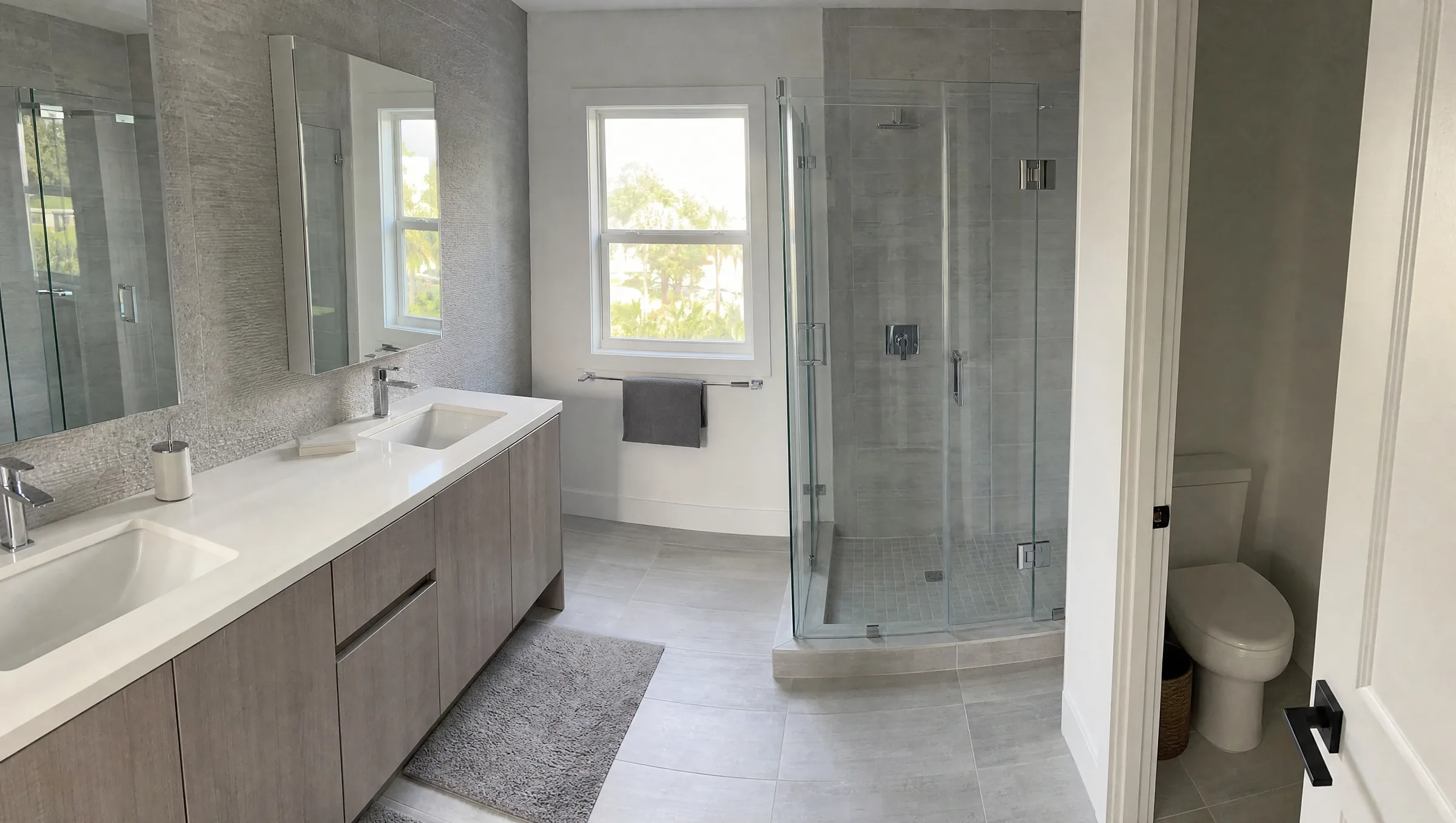
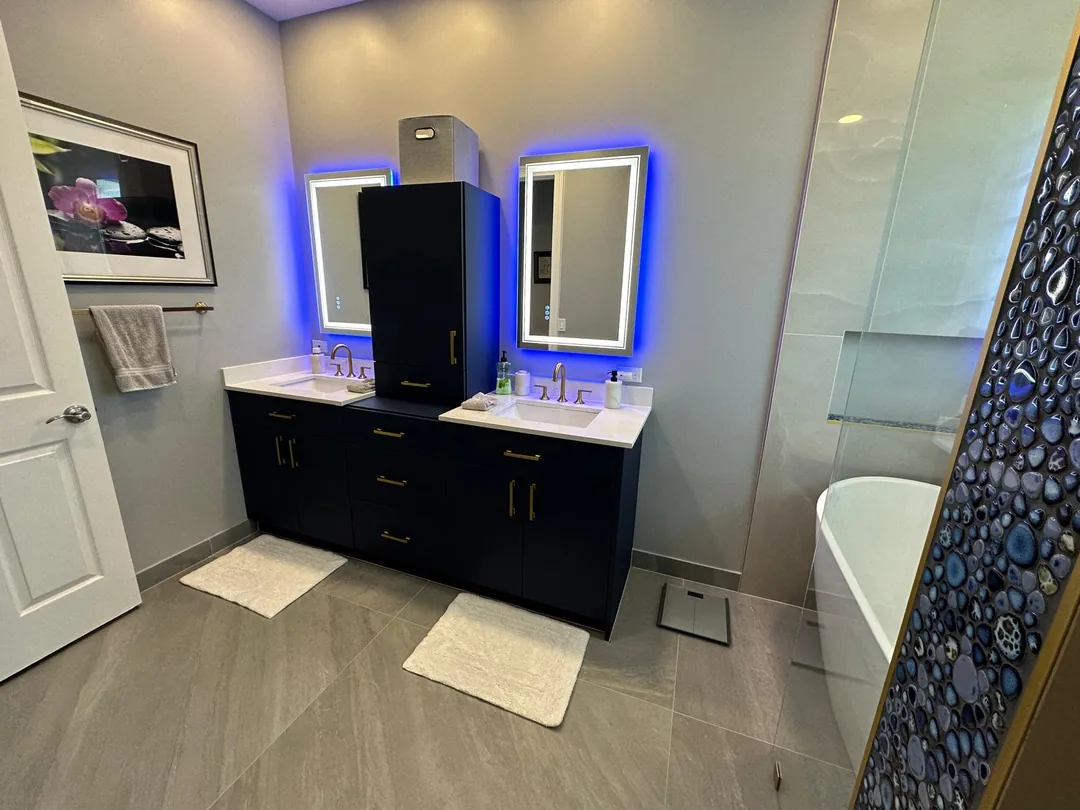
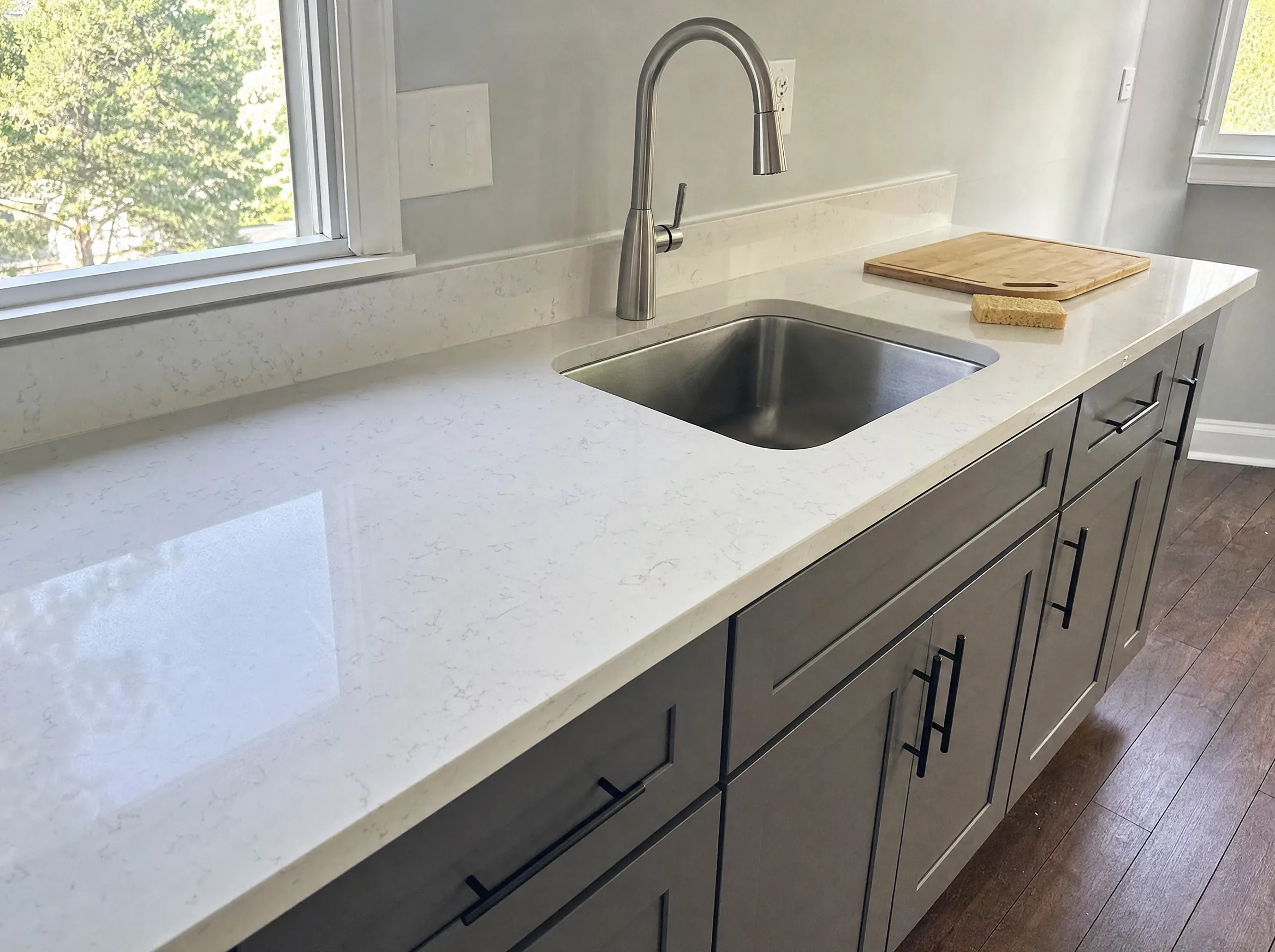
Brushed nickel bathroom light fixtures are a popular choice because the satin finish hides water spots and fingerprints, looks neutral next to almost any tile or paint, and matches the most common faucet finish. The most useful types are vanity bars above the mirror, sconces on both sides of the mirror at roughly face height, and flush or pendant fixtures for the ceiling. Whatever you pick, choose a damp-location rating (wet-rated inside the shower), CRI 90+ at the vanity and one color temperature for the room. Below is how to choose the type, size and quality of a brushed nickel fixture, and how to keep it looking good in a humid bathroom.
Why brushed nickel works in a bathroom
- It hides spots. The brushed texture breaks up water spots, toothpaste splashes and fingerprints that show immediately on polished finishes.
- It is neutral. Brushed nickel has a soft gray tone with a slight warmth, so it works with white, gray, beige and wood-tone bathrooms.
- It matches common fixtures. Faucets, shower trim, towel bars and cabinet pulls are widely available in brushed nickel, which makes a coordinated bathroom easy.
- It suits many styles. Clean-lined fixtures look modern; fixtures with glass shades and curved arms look traditional or transitional.
The one caution: brushed nickel from different manufacturers is not identical. Some lean warmer, some cooler or grayer. If your faucet and light come from different sources, compare them side by side before installing.
Brushed nickel vs other finishes
| Finish | Look | Shows spots and fingerprints | Best with |
|---|---|---|---|
| Brushed nickel | Satin, soft gray, slightly warm | Low | Almost any style; white, gray and warm palettes |
| Polished nickel | Shiny, warm silver | High | Traditional and formal bathrooms |
| Chrome | Bright, cool, mirror-like | High (but wipes clean easily) | Modern and classic white bathrooms |
| Matte black | Flat black | Low for spots, can show hard-water residue | Modern, farmhouse, contrast schemes |
| Brushed brass or gold | Warm, satin | Low | Warm palettes, accent pieces |
If you want a cooler, crisper room, chrome reads cleaner. If you want warmth, brushed nickel with 2700K to 3000K bulbs is a good pairing. Our guide to the warm white bathroom covers color temperature in detail.
Types of brushed nickel bathroom light fixtures
Vanity light bars
The most common fixture above a bathroom mirror. Bars come with two to six lights, or as a single long integrated LED.
- Best for: wide mirrors, medicine cabinets, vanities between two walls.
- Look for: shades that throw light toward the face (frosted or opal glass), and an even spread so the ends of the mirror are not dark.
Wall sconces
Single-light fixtures mounted on both sides of the mirror. This is the best grooming light because it lights the face from the front at eye level.
- Best for: single mirrors with wall space on each side, makeup and shaving.
- Look for: a backplate that covers the wall box, diffused glass, a damp rating.
Pendants and chandeliers
Brushed nickel pendants can hang beside a mirror in place of sconces, or a small chandelier can sit in the middle of a large primary bath.
- Any hanging fixture must stay out of the zone 3 feet horizontally and 8 feet vertically from the top of a tub rim or shower threshold. That rule comes from the electrical code.
Flush mounts, fan-lights and recessed trims
Brushed nickel ceiling fixtures and recessed trim rings tie the ceiling to the vanity. A fan-light combination with a nickel trim gives ventilation and light from one opening, useful in small bathrooms. Recessed lights inside the shower need a wet-location rating.
Sizing and placement guide
Use these planning guidelines, then adjust for your mirror, ceiling height and the people using the room:
- Bar width: about 75 percent of the mirror width. On a 36 inch mirror, a bar about 24 to 28 inches wide looks right.
- Bar height: a few inches above the top of the mirror, typically ending up around 75 to 80 inches from the floor.
- Sconce height: roughly face height, commonly 60 to 66 inches from the floor to the fixture center.
- Sconce spacing: roughly 36 to 40 inches apart, so light reaches across the face.
- Double vanities: separate lighting for each sink, either a pair of sconces or a bar per mirror.
If your current wall box is in the wrong place for these heights, moving it is electrical work that needs a licensed electrician and, for new locations, a permit.
What to look for in a quality brushed nickel fixture
Price and quality vary a lot. These are the buying criteria that separate a fixture that lasts from one that pits or peels:
- Damp or wet location rating. Damp-rated for the bathroom; wet-rated for inside the shower or where water can spray it.
- Base material and plating. Solid brass or steel with a quality plated or coated finish holds up better than thin stamped metal. Look for a clear protective topcoat; it slows tarnish in humid rooms.
- Glass. Frosted, opal or etched glass diffuses light. Clear glass with exposed bulbs looks decorative but glares at the mirror.
- Light quality. For integrated LED, check lumens, color temperature (2700K warm white, 3000K soft white, 3500K to 4000K neutral, 5000K daylight) and CRI 90+. For bulb-based fixtures, check the maximum bulb wattage and base type.
- Dimmer compatibility. Listed as dimmable and compatible with LED dimmers.
- Backplate size. Large enough to cover the box and any paint line from the old fixture.
- Finish match. Compare to your faucet in person or with a finish sample.
Brushed nickel in a humid Florida bathroom
Orlando bathrooms deal with high humidity year round, and humid air on metal finishes is what causes spotting, pitting and corrosion over time. To help a brushed nickel fixture last:
- Run the exhaust fan during showers and for a while after, and make sure it vents outside, not into the attic.
- Choose damp-rated fixtures even for areas well away from the shower.
- Avoid harsh cleaners. Abrasive pads, bleach and acidic cleaners can strip the protective coating and leave dull patches.
- Wipe off hard-water spots before they build up, especially on fixtures near the shower.
How to clean brushed nickel fixtures
- Turn off the light and let bulbs cool.
- Dust with a soft dry cloth.
- Wipe with a cloth dampened in warm water with a drop of mild dish soap, following the direction of the brushed grain.
- Dry with a clean soft cloth so water does not spot.
- Clean glass shades separately with mild soap and water.
Avoid abrasive powders, scouring pads and harsh chemicals on the finish.
DIY or professional installation
Replacing a fixture with a similar one on the same box is a common homeowner job when the power is off at the breaker and the box is sound. Anything beyond that, including moving boxes for sconces, adding recessed lights, adding a circuit or wiring a lighted mirror, is licensed electrical work that needs a permit. Bathroom receptacles must be GFCI protected, and some fixtures over a tub or shower call for GFCI protection in their instructions.
During a bathroom remodel, lighting is planned with the vanity and mirror so boxes land at the right height before drywall and tile go up. For layout ideas, see our bathroom lighting design ideas, and if you like a lighter look, our guide to white bathroom lighting.
Planning a bathroom update in Orlando?
If you are in Orange, Seminole, Osceola or Lake County, including Lake Mary, and want lighting planned as part of a bathroom remodel, Prime Construction measures your space and shows the fixtures, vanity and finishes in a 3D design rendering before anything is ordered. Call (407) 404-3944 or request an estimate.