
When is cabinet refacing the right choice?
Refacing works when two things are true: the cabinet boxes are solid, and you like the layout. If the sink, range and refrigerator are where you want them, the cabinets are square and dry, and the problem is mostly how the kitchen looks, refacing gets you a new look with far less disruption than a full tear-out. Your countertops can often stay if they are in good shape and you are happy with them, although many clients replace them at the same time.
It is also a good fit when you want to keep the kitchen running. Because the boxes stay on the wall and the plumbing is not touched, most refacing jobs leave the sink and appliances usable for much of the work.
- Boxes are dry, square and firmly attached to the wall
- The layout and the appliance locations work for you
- Your countertops are staying, or are being replaced in the same footprint
- The goal is a new look rather than more storage or a new footprint
When should you replace cabinets instead?
Replace when the boxes are the problem. The most common reason in Central Florida is the sink base: years of small leaks and humidity cause particleboard to swell, crumble and lose its grip on screws. Refacing over that only hides damage that keeps getting worse. Sagging shelves, cracked face frames, loose joints and boxes pulling away from the wall all point the same way.
Replace when you want something refacing cannot give you: a different layout, an island, a moved sink or range, deeper drawers instead of doors throughout, taller wall cabinets to the ceiling, or European frameless construction. In those cases the money spent refacing old boxes is better spent on new ones. Our kitchen cabinets page covers new cabinet options in detail.
Want a licensed contractor to look at your cabinet refacing?
What does cabinet refacing include?
A full refacing job has four parts. First, the old doors, drawer fronts and hardware come off. Second, the face frames and exposed sides of the boxes are cleaned, repaired where needed and covered with a wood veneer or laminate that matches the new doors. Third, new doors and drawer fronts are installed on new concealed hinges, and drawers get new fronts, or new drawer boxes and slides when the old ones are worn. Fourth, new pulls, knobs, trim and any crown molding or light rail go on, and every door is adjusted so the gaps are even.
Interior surfaces are usually left as they are, cleaned, or lined with a new shelf liner. Small repairs, such as a loose shelf pin or a scuffed toe kick, are handled along the way. If you want new interiors, more drawers and new hardware throughout, that is often the point where new cabinets make more sense.
Can frameless European cabinets be refaced?
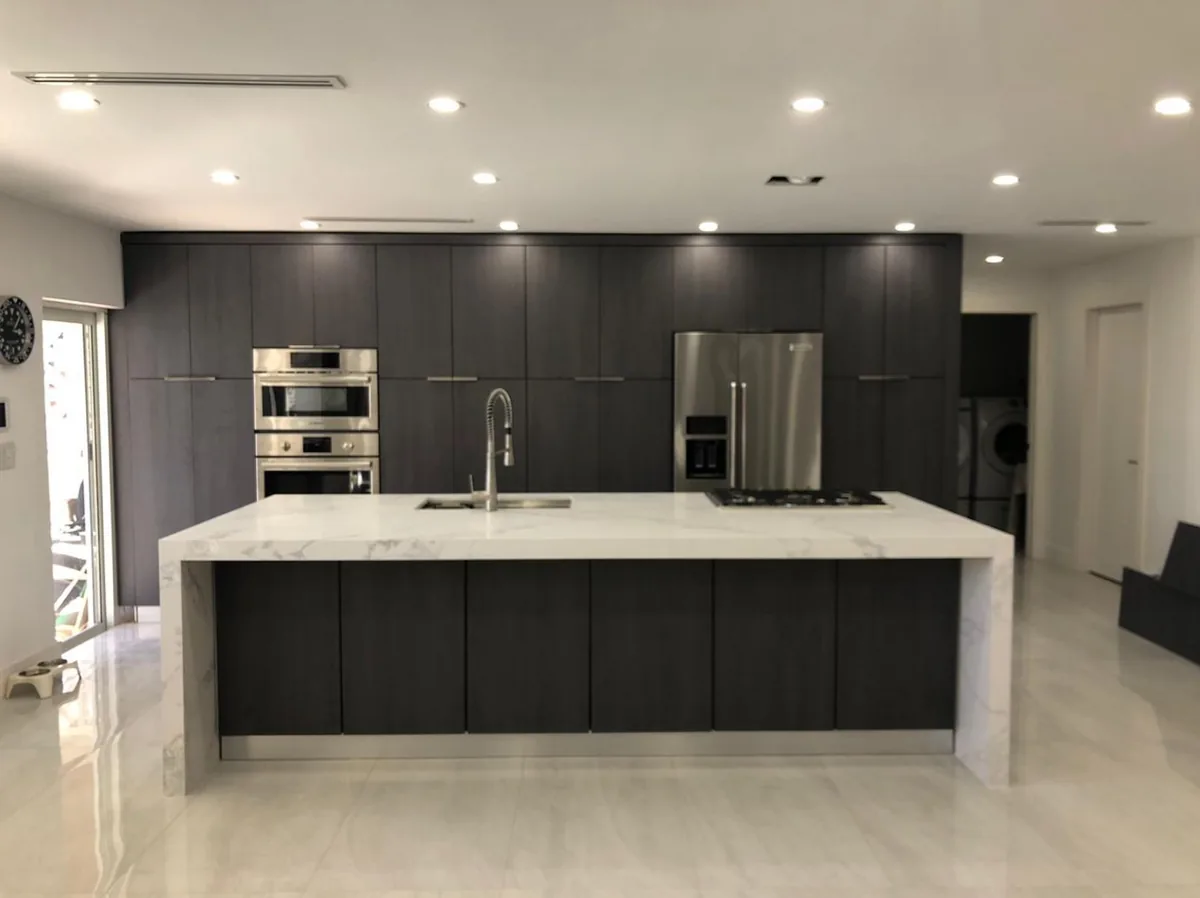
Not in the same way. Traditional refacing covers the face frame, the solid wood frame on the front of a framed cabinet. Frameless European cabinets have no face frame: the doors cover nearly the entire box front, and only the thin box edges show. With frameless cabinets, the update is really a door and drawer-front replacement, plus new side panels where ends are exposed.
That can work well when the boxes are good and the hinges and drawer systems are in working order, because frameless doors are held by adjustable hinges that accept new doors drilled to match. It does not work when the box edges are chipped or swollen. We check the cabinet construction at the in-home visit and tell you which approach fits your kitchen.
Refacing vs painting your cabinets
Painting keeps the existing doors and changes only the color. It can look good on solid wood doors with a simple profile when the prep is thorough: degreasing, sanding, priming and a durable cabinet coating. It does not change the door style, and painted finishes on old doors chip at edges and show wood movement at joints, which is common in Florida humidity.
Refacing gives you new door styles, new hinges and a factory finish, and it fixes worn hardware at the same time. If your doors are thermofoil that is peeling, or a dated raised panel you do not want to keep, painting will not solve the problem, and refacing or replacement will.
Want a licensed contractor to look at your cabinet refacing?
What drives the cost of cabinet refacing?
Refacing cost depends on how many doors and drawer fronts you have, the door style and material, the veneer or laminate for the face frames and ends, whether drawer boxes and slides are replaced, and any added cabinets, crown molding, panels or storage inserts. Countertop, backsplash or lighting work in the same project is priced separately.
We give a written estimate after inspecting your cabinets at home. If the inspection shows the boxes are not worth saving, we will say so and price new cabinets instead. Broader kitchen pricing context is in our kitchen remodel cost guide.
Typical timeline
Every project gets its own schedule in writing before work starts. These are the ranges most cabinet refacing projects fall into.
| Phase | Typical duration | What happens |
|---|---|---|
| Inspection and measurement | 1 visit | We inspect the boxes, measure every door and drawer opening, and confirm that refacing is the right approach. |
| Selections | 1 to 2 weeks | Choose door style, finish, hardware and any storage inserts with our designer in the showroom. |
| Ordering doors and materials | Typically 3 to 6 weeks | Doors, drawer fronts and veneer are made to your measurements, then checked on arrival before we schedule installation. |
| On-site refacing | Typically 3 to 5 days | Old doors off, frames and ends covered, new doors, drawer fronts and hardware installed and adjusted. The kitchen stays partly usable. |
| Final adjustment and walk-through | Same week | Every hinge and drawer is adjusted, touch-ups are completed, and we walk the kitchen with you. |