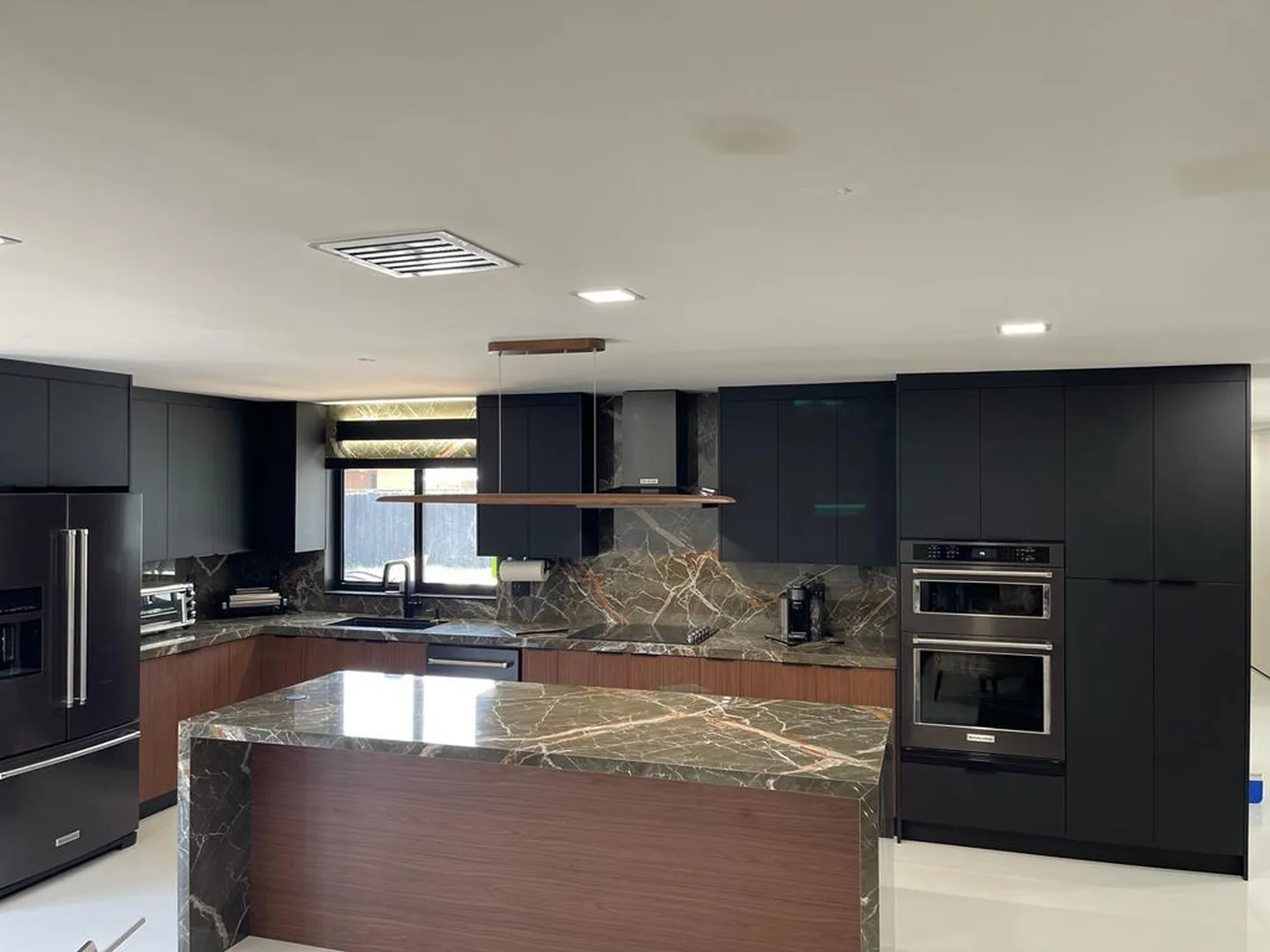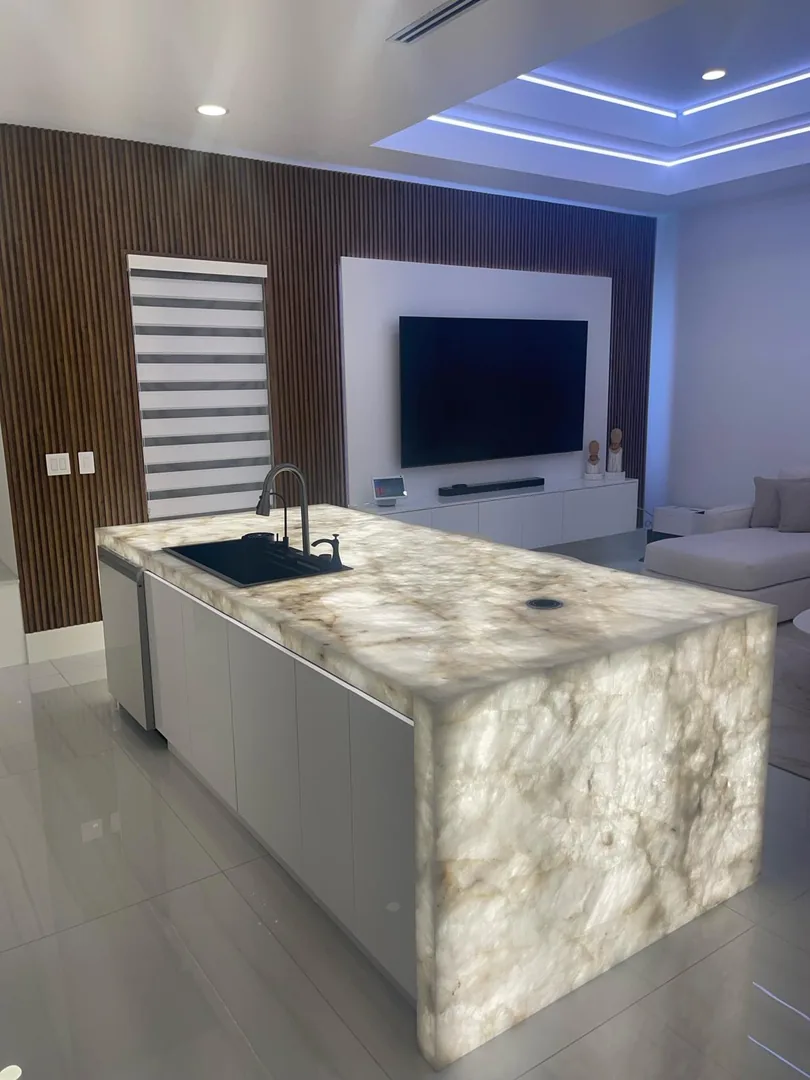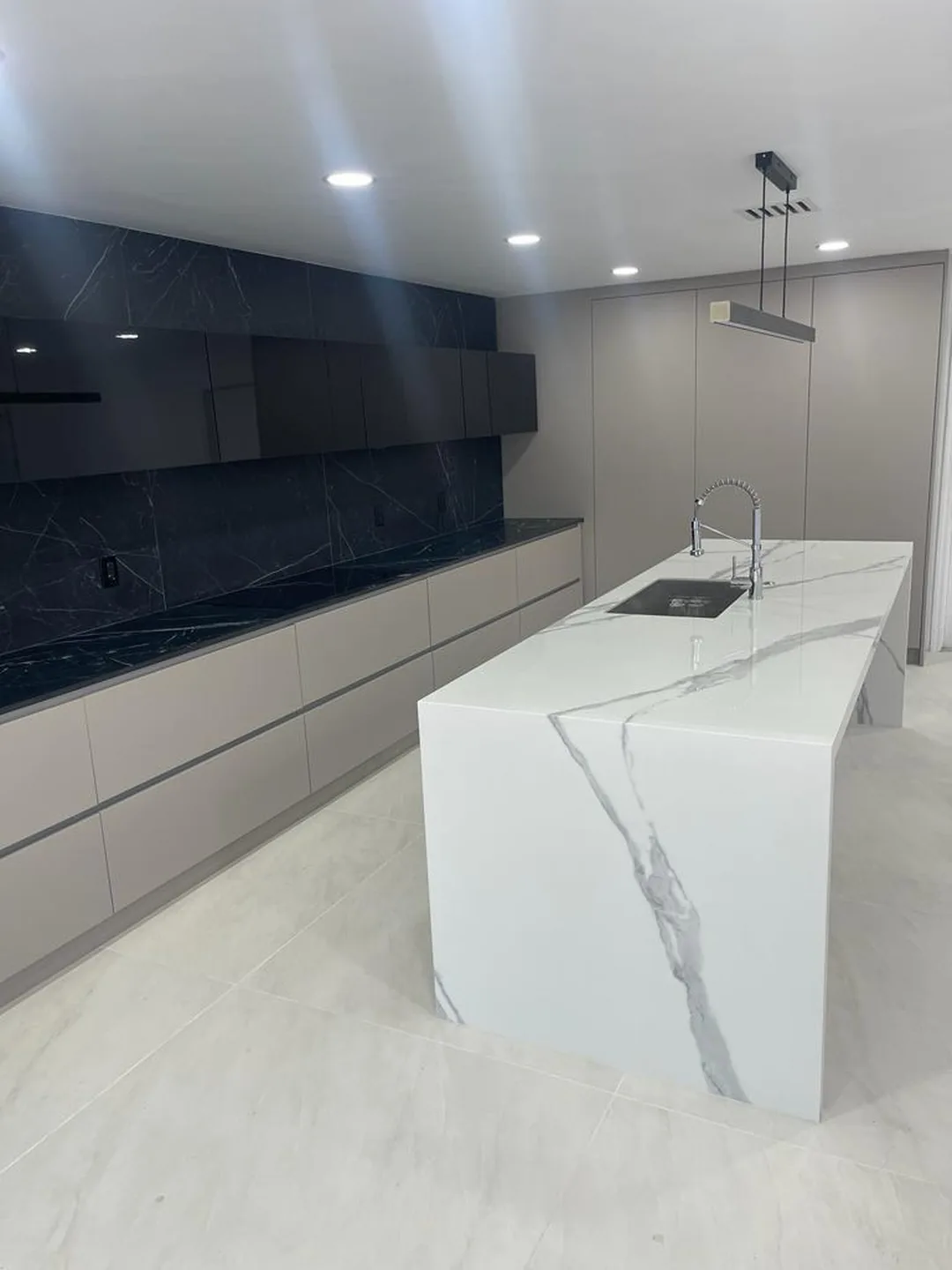

Quartz vs granite vs quartzite vs marble for Florida kitchens
Quartz is an engineered surface made mostly of ground quartz bound with resin. It is non-porous, needs no sealing, resists stains and comes in consistent colors and patterns, which makes it the most requested material in the kitchens we remodel. Its weak point is heat: a hot pan set directly on it can scorch or crack the resin, so trivets are a must. Quartz is also not intended for outdoor kitchens or spots that get strong direct sun, because UV light can discolor the resin over time.
Granite is natural stone. It handles heat well, resists scratches, and every slab is different. Most granites benefit from periodic sealing, and lighter, more porous stones need it more often. Quartzite is a natural stone that is often harder than granite, with a marble-like look, and it also needs sealing. Be careful with names: some stones sold as quartzite behave more like marble, so we check the stone before you commit.
Marble is beautiful and cool to the touch, but it is softer and reacts to acids. Lemon juice, wine, tomato and many cleaners will etch a dull mark into polished marble, even after sealing. It is often a better fit for a bathroom vanity or a baking area than for the main prep counter.
Solid surface and other options
Solid surface is an acrylic-based material that can be joined with nearly invisible seams and formed into an integrated sink. Scratches can be sanded out, which makes it practical in bathrooms and busy family kitchens. It does not handle heat as well as stone and has a softer, more matte look.
Porcelain slabs and tile are other choices, especially for backsplashes, outdoor areas and bathroom walls. Laminate remains the most economical surface and has improved a lot in appearance, though it cannot take an undermount sink in most cases. We help you match the material to the room rather than defaulting to one answer.
Want a licensed contractor to look at your countertops?
Heat, sun and humidity: what Central Florida does to countertops
Florida kitchens often get strong afternoon sun through sliding doors and windows, and many homes have outdoor kitchens on a lanai. That matters for material choice. Natural stone such as granite tolerates sun and heat outdoors; engineered quartz is generally meant for indoor use. If part of your counter sits in direct sun every afternoon, tell us during the design so we can choose accordingly.
Humidity is less of a problem for the countertop itself than for what sits under it. A countertop is only as stable as the cabinets beneath. Particleboard sink bases that have swelled from leaks can let a heavy stone top shift and crack at the sink. We check the cabinets before installing stone, and in a full remodel we recommend plywood sink bases for this reason.
Sealing and everyday care
Quartz needs no sealing; warm water and mild soap are enough, and harsh chemicals and abrasive pads should be avoided. Granite and quartzite should be sealed when installed and then periodically; a simple test is to leave a few drops of water on the surface for several minutes. If the stone darkens, it is time to reseal. Marble needs the same sealing plus quick cleanup of anything acidic.
For every material, use cutting boards and trivets, wipe spills quickly, and do not stand or sit on overhangs. Unsupported overhangs past a certain depth need brackets or corbels, which we plan into the cabinet design when you want seating at an island or peninsula.
Edge profiles, sink cutouts, templating and seams
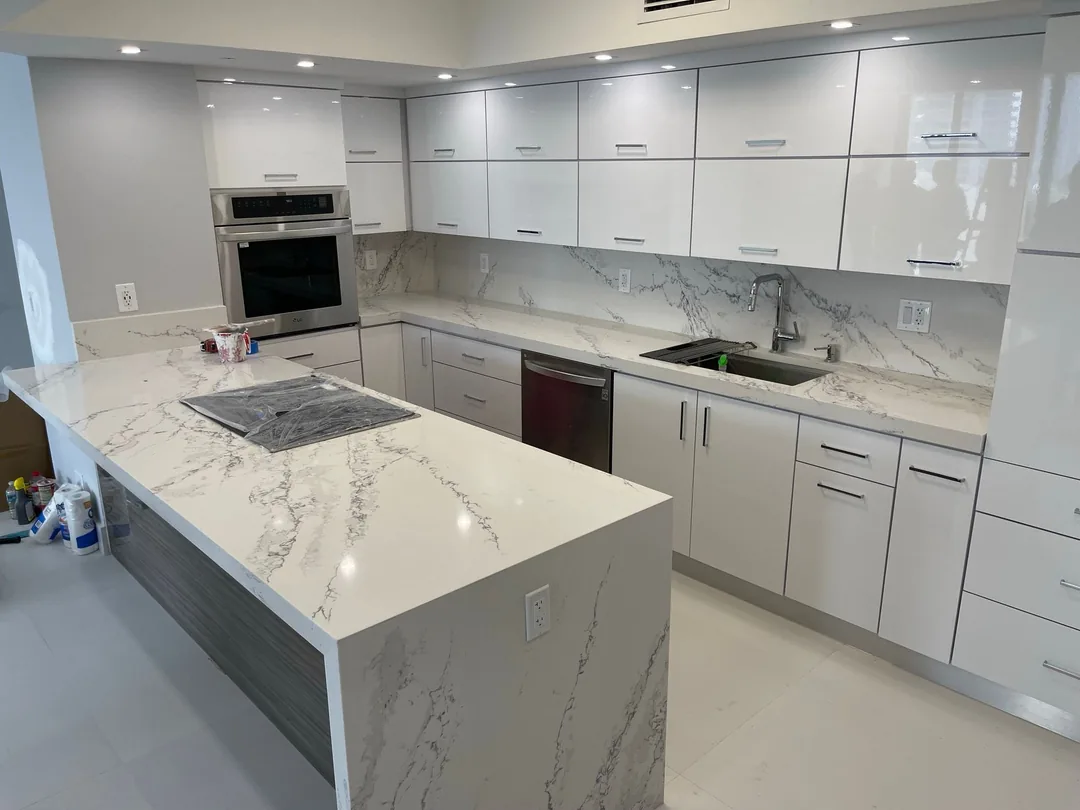
The edge profile changes how a counter looks and how it wears. Eased and square edges suit modern kitchens and are easy to clean. Bevels and half-bullnose soften the edge and resist chipping. Ogee and other decorative profiles suit traditional kitchens. Mitered edges make a counter look thicker and are often used for waterfall islands.
Sinks are usually undermounted below stone so you can wipe crumbs straight in. Farmhouse sinks need cabinets built for them. The template is made after the cabinets are installed and level, and it records every wall, appliance gap and fixture location. Seams are unavoidable on long runs and L-shaped counters; we plan them away from the sink and cooktop where possible, match them carefully, and show you their location before cutting.
Want a licensed contractor to look at your countertops?
Why buy countertops as part of a remodel?
A countertop sits at the center of several trades: the cabinets below it, the plumbing for the sink, the electrical for outlets in the backsplash, the cooktop or range, and the tile above it. When each is handled by a different company, small mismatches become delays: a sink base that is not square, a faucet that does not fit the hole, outlets that end up behind the stone.
As a licensed general and plumbing contractor, we coordinate the whole sequence: cabinets set, template, fabrication, installation, sink and faucet hookup, and backsplash. Countertops are usually one part of our kitchen remodeling and bathroom remodeling projects, and we also replace countertops on existing cabinets when the cabinets are sound.
What drives the cost of new countertops?
Countertop cost comes from the material and its grade, the number of slabs your layout needs, edge profile, thickness, the number and type of cutouts, a full-height stone backsplash versus tile, removal of old tops and any plumbing changes. Exotic natural stones and large waterfall islands sit at the top end; standard quartz and common granites are generally more economical.
A written estimate follows the in-home measurement, once we know the layout, the material and the slab count, so you are comparing real numbers for your kitchen. For context on how countertops fit into an overall budget, see our kitchen remodel cost guide.
Typical timeline
Every project gets its own schedule in writing before work starts. These are the ranges most countertops projects fall into.
| Phase | Typical duration | What happens |
|---|---|---|
| Material and design selection | 1 to 2 weeks | Compare samples, choose the material, edge, sink and backsplash, and, for natural stone, select the slab. |
| Cabinets set and level | Varies with the project | In a remodel, the countertop waits for cabinets to be installed and leveled. On existing cabinets, we check and correct level first. |
| Templating | 1 visit | A precise template is made from the installed cabinets, with sink, faucet and cooktop locations confirmed. |
| Fabrication | Typically 1 to 2 weeks | The tops are cut, edged and polished to the template, with seams and veining placed as planned. |
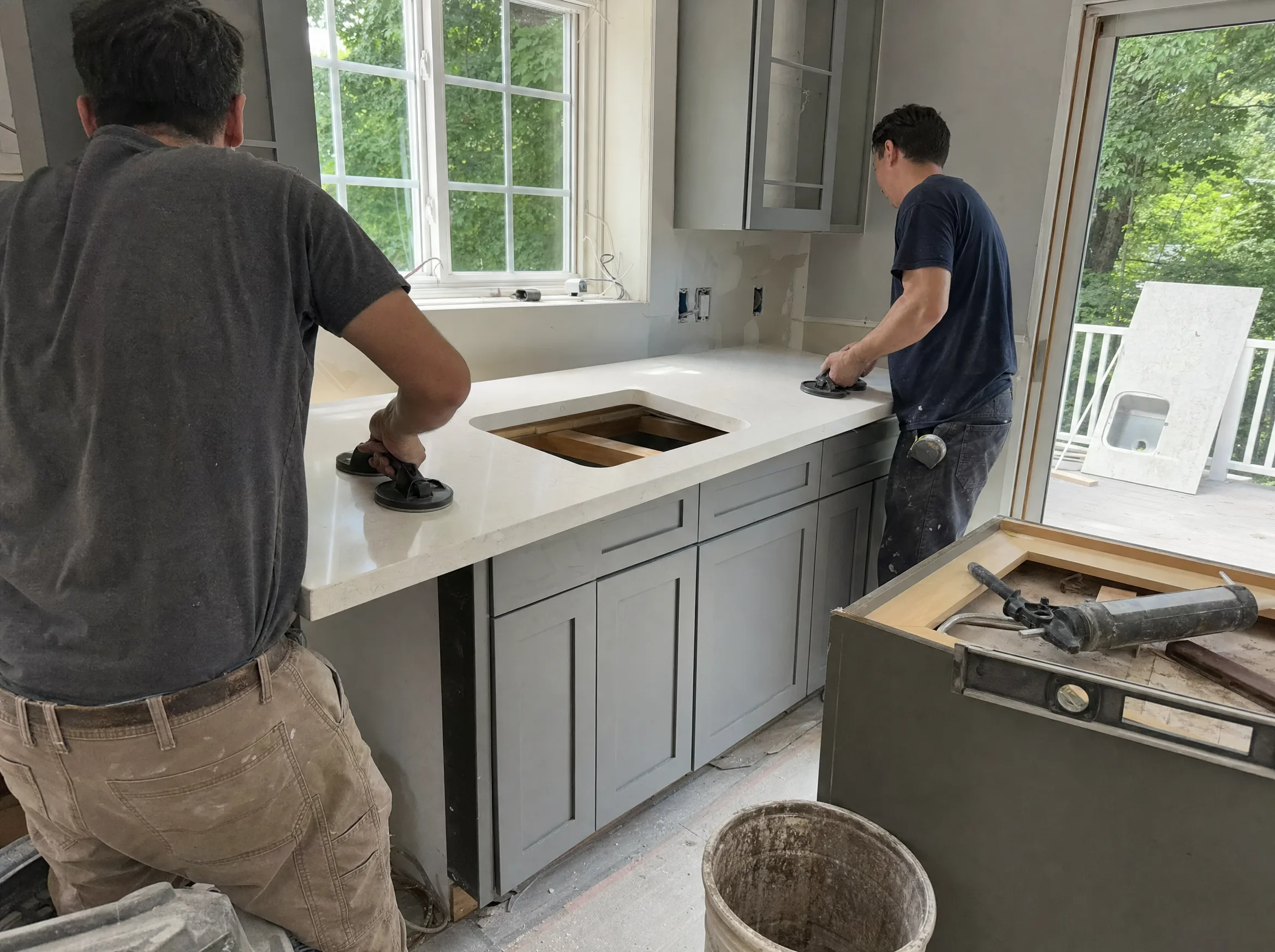
| Installation and hookups | Typically 1 day | Tops installed and seamed, sink mounted, faucet and drain connected, then the backsplash follows. |