
Cost Guides
Bathroom Demolition Cost: How Much to Demo a Bathroom
Bathroom demolition cost in Orlando for 2026: $1,500 to $5,000 for a full gut to studs, partial demo vs full gut, and a simple way to estimate your own.
By the Prime Construction team Updated October 13, 2026 6 min read
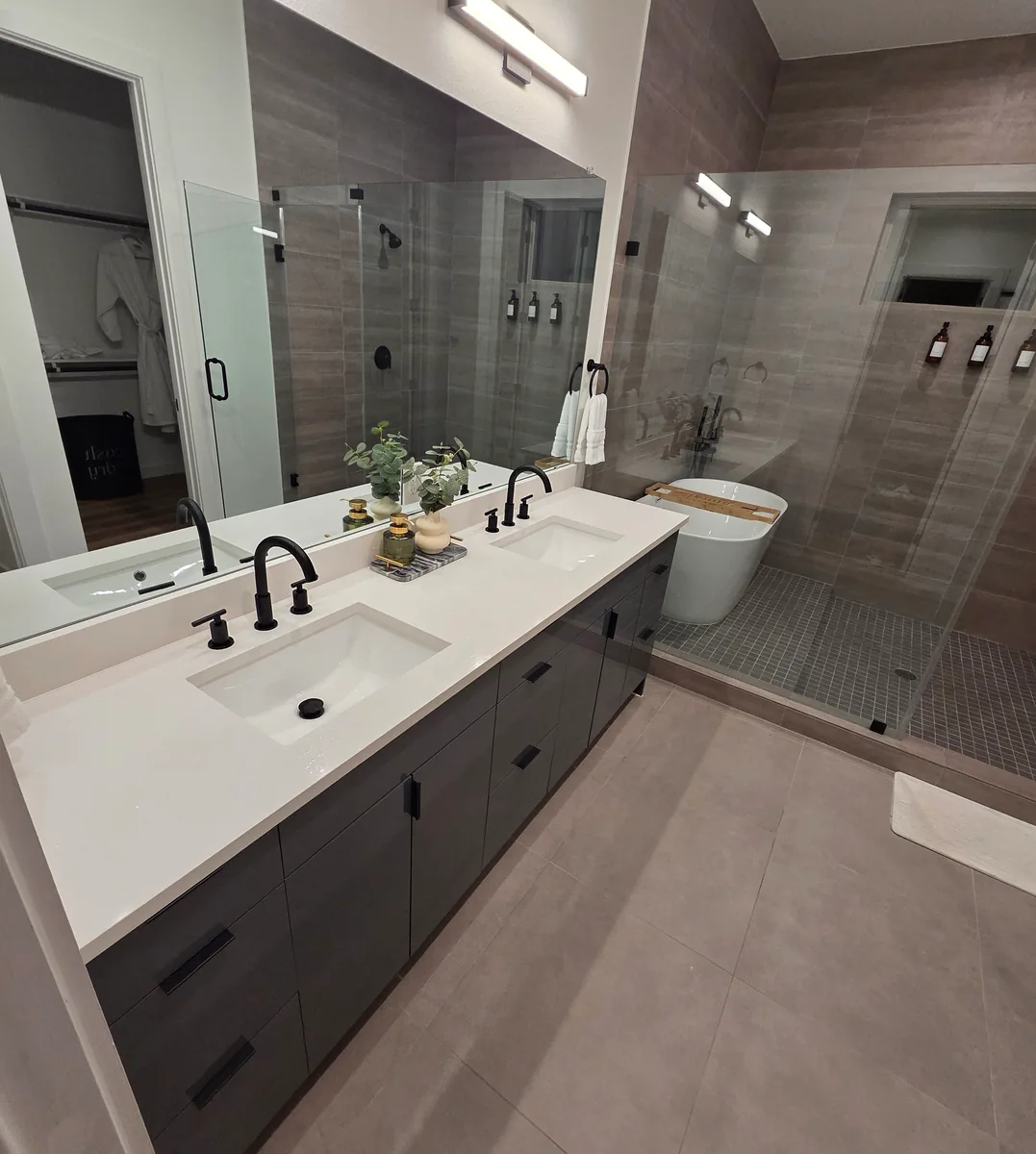
Bathroom demolition in the Orlando area typically costs $1,500 to $5,000 in 2026 for a full gut to the studs and subfloor, including debris removal. Partial demolition, such as removing only the shower, costs less: a tile shower or tub surround taken to the studs runs about $800 to $2,500. Where your bathroom lands depends less on square footage than on how it was built: mortar beds, cast iron tubs and tile on every wall push the price up. Below is how to estimate your own number, what partial versus full demolition includes, and what to watch for.
Bathroom demolition cost in Orlando
Typical Orlando-area planning ranges for 2026, labor plus haul-away. Your number depends on size, construction and what is behind the walls, so a written estimate after measuring is the real figure.
| Scope | Typical range |
|---|---|
| Shower or tub surround only (tile or unit to studs, haul-away) | $800 to $2,500 |
| Shower with mortar-bed floor or cast iron tub | High end of $800 to $2,500, or above |
| Full bathroom demolition (to studs and subfloor, debris removal) | $1,500 to $5,000 |
Demolition is a small share of a remodel. For context, a same-layout guest bath remodel typically runs $12,000 to $25,000 and a full primary bath $25,000 to $50,000, demolition included. Our Orlando bathroom remodel cost guide breaks those totals down.
How to estimate your bathroom demolition cost
Online “calculators” multiply square feet by a rate, which misses what actually drives the work. A better quick estimate:
- Start with the range for your scope. Full gut: $1,500 to $5,000. Shower only: $800 to $2,500.
- Move toward the low end if: the bathroom is small, the tub or shower is fiberglass or acrylic, tile is only on the floor and tub surround, and the room is on the ground floor near an exterior door.
- Move toward the high end for each of these:
- Mortar-bed (mud-set) shower floor or walls.
- A cast iron tub, which often weighs 300 pounds or more.
- Tile on most walls, or tile to the ceiling.
- Two vanities, a tub and a separate shower in one room.
- A second-floor bathroom or a long path to the driveway.
- Finished floors throughout the house that need protection.
- Keep separate lines for: asbestos testing and abatement in older homes, water damage repair, and any plumbing relocation. These are not demolition costs and should not be mixed into the demo price.
This gets you close enough to budget. A contractor walk-through tells you which side of the range you are on.
What full bathroom demolition includes
A full gut is everything down to the structure:
- Fixtures: toilet, vanity and top, sink, faucet, mirror, medicine cabinet, accessories, shower door or glass.
- Tub and shower: the tub or base, the surround or tile walls, the backer board or mortar bed.
- Floor: tile and the setting bed or underlayment, down to the slab or subfloor.
- Walls and ceiling: drywall or plaster where it is coming off, to the studs.
- Rough-in exposure: supply lines, drain and vent lines, and wiring are left exposed so they can be inspected, capped or replaced.
- Protection, cleanup and haul-away.
In most Central Florida homes the floor is a concrete slab, so “to the subfloor” means down to concrete on ground-floor bathrooms. Second-floor and some older homes have wood subfloors, which we check for soft spots and rot around the toilet and tub.
Partial demolition vs a full gut
| Partial demolition | Full gut | |
|---|---|---|
| What comes out | Selected items: shower, vanity, floor or toilet | Everything to studs and subfloor |
| Demolition cost | Lower | $1,500 to $5,000 |
| Best for | Sound bathrooms getting one or two upgrades | Older baths, layout changes, signs of leaks |
| Plumbing access | Limited to the area opened | Full access to supply, drain and vent |
| Risk | New finishes may sit against old problems | Problems are found and fixed before rebuilding |
Partial demolition is the right call more often than people think. If the floor tile is sound and the leak-free shower is the only thing that needs work, retiling the shower and swapping the vanity is a reasonable scope. See our retiling bathroom cost guide for those numbers.
A full gut makes sense when:
- The bathroom is original to a home from the 1990s or earlier.
- You are changing the layout, moving a toilet or converting a tub to a shower.
- There are signs of water damage: soft floor around the toilet, stains below the bathroom, loose tile, or a musty smell.
- Supply lines are galvanized steel or polybutylene.
Costs that are not part of demolition
Keep these out of the demolition number and in their own lines so you can compare estimates fairly.
Hidden damage. Water damage behind tile or subfloor rot often runs $2,000 to $8,000 or more depending on how far it has spread. Smaller fixes, such as a leaking valve or a short section of rotted plate, are less.
Asbestos testing and abatement. In homes built before the 1980s, old floor tile, mastic, some adhesives and joint compound can contain asbestos. Test before demolition, and if it is positive, have a licensed abatement contractor remove it. The EPA’s asbestos page explains why disturbing these materials is the risk.
Plumbing relocation. Moving a drain on a slab means cutting and trenching concrete. That is a remodel cost, priced with the new layout.
Permits. Fees are set by each city or county fee schedule, usually based on the job’s value, and are included in a contractor’s estimate. Inside city limits the city building department issues them; in unincorporated areas, the county does.
DIY bathroom demolition: what to know
Homeowners can do some demolition, and it can trim a budget, but plan for the full picture:
- You still pay for disposal. Tile, mortar and a tub are heavy, and construction debris does not go out with household trash.
- Shut off water and power correctly. Cut supply lines and live wires behind walls are the most common DIY damage.
- Protect the drain. Mortar chunks in an open drain line become a plumbing bill.
- Do not DIY in an untested older home. Asbestos is the reason.
- Coordinate with your contractor. Many contractors prefer to do demolition themselves so they see the framing and plumbing as it comes apart. If you do it, agree in writing on what condition the room must be in.
How long it takes
Demolition is usually one to two days for a typical bathroom. Then comes inspection of the opened room, any repairs, and the rough plumbing and electrical inspections. For the whole sequence after demo, see our week-by-week bathroom remodel timeline.
Choosing who does your demolition
The cleanest approach is to have the same licensed contractor demolish and rebuild. When you compare estimates, look for:
- A written scope that lists what comes out and what stays.
- Protection, haul-away and disposal stated as included.
- A clear process for hidden damage: stop, show you, price it, then fix it.
- Who is responsible for permits and inspections. In Florida you can verify a contractor’s license at myfloridalicense.com.
Planning a bathroom remodel in Orlando?
Demolition is where a bathroom remodel either starts clean or starts with surprises. Prime Construction handles demolition as the first phase of every bathroom remodeling project, then inspects the open walls before rebuilding. We work across Orange, Seminole, Osceola and Lake counties, including Winter Park and Kissimmee. Call (407) 404-3944 or request an estimate.