
Cost Guides
Cost of Bathroom Repair: Common Fixes and When to Remodel
Cost of bathroom repair in Orlando for 2026: small fixes from a few hundred dollars to about $2,000, water damage $2,000 to $8,000+, and when to remodel.
By the Prime Construction team Updated October 13, 2026 5 min read
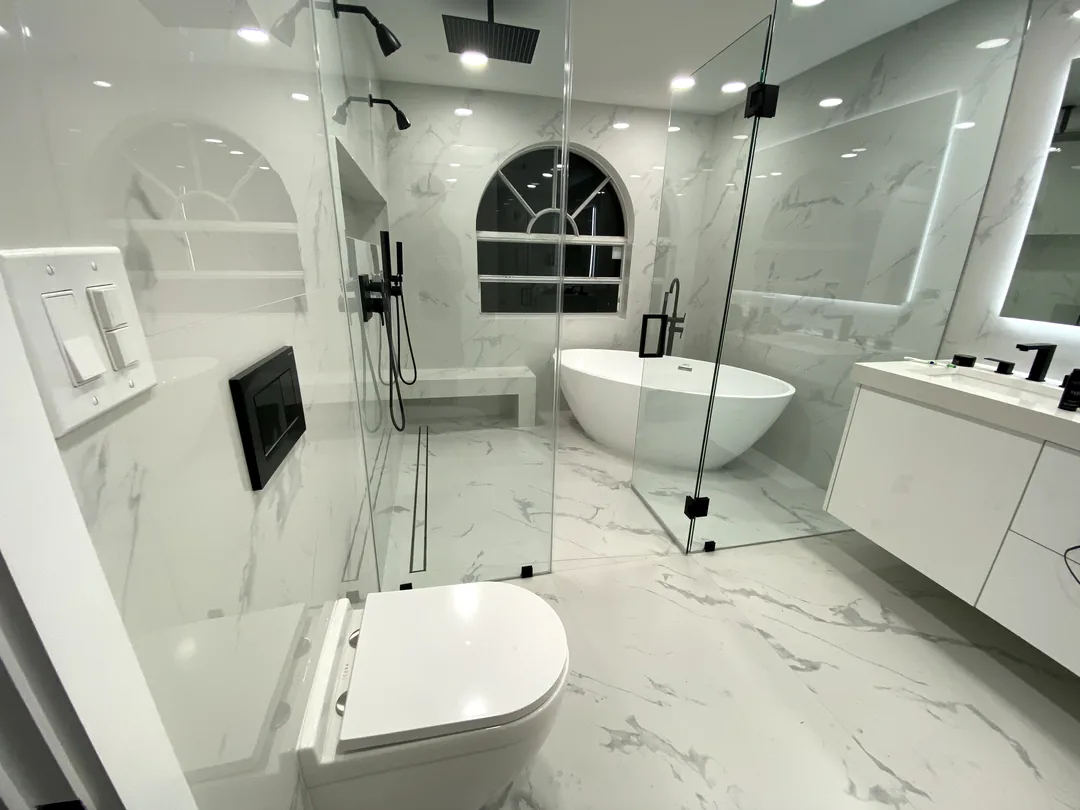
The cost of bathroom repair in the Orlando area typically runs from a few hundred dollars to about $2,000 for small jobs in 2026: a leaky shower valve, a cracked tile area, resetting a toilet, or caulk and grout work. When water has gotten behind the tile or into the subfloor, repairs often run $2,000 to $8,000 or more, depending on how far the damage has spread. Beyond that, a repair starts to overlap with a remodel. Below we cover common repairs and what drives their cost, how to tell a small problem from a hidden one, and when it makes more sense to remodel.
Bathroom repair cost at a glance
Typical Orlando-area planning ranges for 2026, labor plus materials. The real number depends on what is found once the area is opened.
| Repair | Typical range |
|---|---|
| Small repairs: leaky valve, cracked tile area, reset toilet, caulk and grout | A few hundred dollars to about $2,000 |
| Water damage behind tile or subfloor rot | Often $2,000 to $8,000+ |
| Shower demolition only (tile or tub surround to studs, haul-away) | $800 to $2,500 |
| Retiling shower walls (standard 5 ft alcove, full redo) | $4,000 to $10,000 |
| Vanity swap, labor only | $300 to $900 |
Common bathroom repairs and what drives the cost
Leaky shower or tub valve
A dripping shower head or a handle that will not shut off usually means a worn cartridge or valve parts. If the valve is a common type and parts are available, it is a quick repair from the front, through the trim. If the valve body itself is failing or leaking inside the wall, the repair needs access from behind (through an adjacent closet or wall) or through the tile, which raises the cost.
Cracked or loose tile
One or two cracked floor tiles can often be replaced individually if you have spares or can match them. Loose tile on a shower wall is more serious: it often means water has softened the backer behind it. Replacing a few tiles without fixing the wall underneath just delays the problem.
Grout and caulk
Cracked grout and failed caulk are the most common source of slow shower leaks. Regrouting and recaulking is one of the least expensive repairs and one of the most valuable. It is worth doing at the first sign of cracks, especially in Florida humidity, where mold grows quickly in gaps.
Running or rocking toilet
A running toilet usually needs internal parts. A toilet that rocks, or leaves a stain around the base, may need a new wax ring and a reset, and sometimes a repaired flange. If the floor around it is soft, the repair becomes a subfloor job.
Slow drains
Clogs in sink and shower drains are usually simple. Repeated slow drains in an older home can point to aging cast iron drain lines, which are a bigger conversation, especially on a slab.
Exhaust fan
A fan that does not run, or one that is undersized or vents into the attic instead of outdoors, leads to mold and peeling paint. Replacing or properly venting it is a modest job with electrical work, and one of the best long-term protections for a Central Florida bathroom.
Vanity and faucet
A leaking faucet or drain under the sink is usually a straightforward repair. If the vanity bottom has swollen from a long leak, replacement makes more sense than repair. Labor for a like-for-like vanity swap typically runs $300 to $900; our vanity installation cost guide covers that in detail.
Water damage: the repair that changes the budget
Most expensive bathroom repairs start as small leaks: a failed grout line, a torn shower pan liner, a loose toilet seal or a leaking valve. In Central Florida homes, these patterns are common:
- Tile over plain or moisture-resistant drywall with no waterproofing, in many 1980s and 1990s homes.
- Rotted bottom plates and studs where the wall meets the slab.
- Failed liners under older mortar-bed shower floors.
- Galvanized or polybutylene supply lines in older homes that develop leaks inside the wall.
- Mold on the back of wallboard, helped along by humidity.
When the damage is behind tile or under the floor, the repair has several steps: open the area, find and fix the source, dry it out, replace damaged framing or subfloor, and rebuild with new backer, waterproofing and finishes. That is why water damage often runs $2,000 to $8,000 or more, and why it costs less the earlier it is caught.
Warning signs to check now
- Tile that sounds hollow when tapped, or moves.
- Grout that keeps cracking in the same place.
- Soft, stained or bubbling drywall on the other side of the shower wall.
- Peeling paint or swollen baseboard near the tub or toilet.
- A musty smell that does not clear after the fan runs.
- Stains on the ceiling below an upstairs bathroom.
Repair or remodel?
A repair makes sense when:
- The problem is isolated, such as one valve, one toilet or a small tile area.
- The waterproofing behind the shower is sound.
- You are happy with the bathroom otherwise.
A remodel makes more sense when:
- The damage reaches behind the shower walls or under a large part of the floor.
- The repair would remove finishes you were planning to replace anyway.
- The same problem keeps coming back.
- The bathroom is original to an older home and the plumbing is near the end of its life.
Once the shower walls have to come off, you are often most of the way to a retile. Retiling the shower walls in a standard alcove, including demo, cement board, waterproofing and mid-range tile, typically costs $4,000 to $10,000. Retiling the floor and shower walls together typically runs $8,000 to $18,000; see our retiling bathroom cost guide. A same-layout guest bath remodel typically runs $12,000 to $25,000.
DIY repairs vs calling a pro
Reasonable DIY repairs include recaulking, regrouting small areas, replacing toilet internals, and clearing simple clogs. Call a licensed pro for:
- Anything inside a wall: valves, supply lines, drain lines.
- Loose tile on shower walls, which usually means wall damage.
- Soft floors around a toilet or tub.
- Electrical work, including exhaust fans and outlets.
- Mold over a larger area or any suspected leak you cannot find.
In homes built before the 1980s, have old tile, adhesive and joint compound tested for asbestos before cutting or breaking them. The EPA has plain guidance on asbestos in the home.
Insurance and documentation
If the damage came from a sudden event, such as a burst supply line, call your insurer before repairs start and take photos of everything before it is removed. Many policies treat sudden damage differently from slow leaks and wear. We do not advise on coverage, but we can document what we find when the area is opened.
Planning a bathroom repair in Orlando?
Small leaks are inexpensive when they are caught early and expensive when they are not. When a repair involves water damage behind tile or plumbing inside the wall, Prime Construction can open it up, show you what we find, and price either the fix or a bathroom remodel, with plumbing handled under our Certified Plumbing Contractor license (CFC1433952). We work in Orlando, Sanford and across Central Florida. Call (407) 404-3944 or request an estimate.