
Bathroom
Heated Floor Small Bathroom: Cost, Types and Is It Worth It
Is a heated floor worth it in a small bathroom? Electric mats vs cables, 120V vs 240V, where to heat, Orlando install cost and running cost math.
By the Prime Construction team Updated October 13, 2026 6 min read
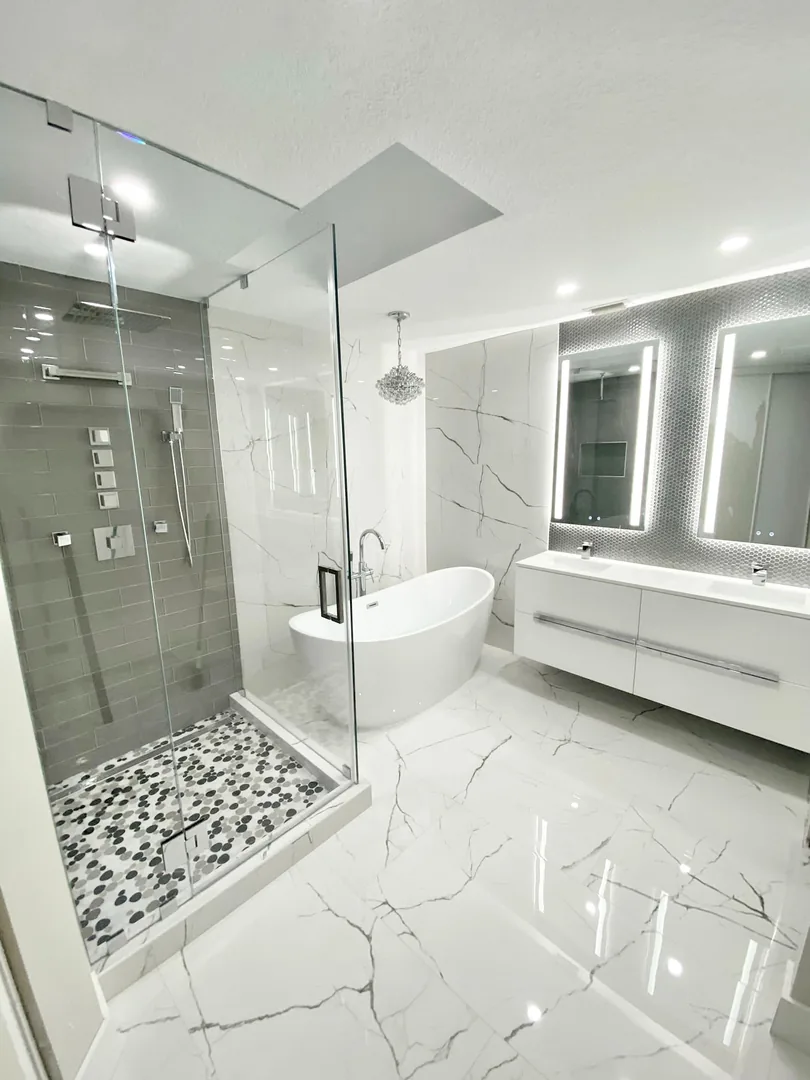
A heated floor in a small bathroom is usually an electric radiant system, a thin heating mat or cable set under new tile and controlled by a thermostat. Because a small bathroom has so little open floor, it is one of the least expensive comfort upgrades in a remodel: typically $1,000 to $3,000 installed in the Orlando area. In Central Florida it is a comfort and drying upgrade rather than a source of heat for the house. Below are the system types, how to plan the heated area, the electrical requirements and how to estimate running cost.
Is a heated floor worth it in a small bathroom?
It depends on what you want from it. What a heated floor does well:
- Warm tile on cool mornings. Central Florida has fewer cold days than most of the country, but porcelain and stone floors still feel cold from December through February.
- Faster drying. A warm floor dries splashes and bath mats quicker, which helps in a humid climate.
- No visible equipment. No vents, no space heater, nothing on the wall but a thermostat.
- Small area, small cost. A 5x8 bathroom may only have 15 to 25 square feet of open floor to heat.
What it does not do: replace your home’s air conditioning and heating system, or fix a bathroom that is cold because of poor insulation or a drafty window.
Types of heated floor systems
Electric heating mats
A thin mesh with heating cable attached in a fixed pattern. You roll it out over the open floor area and set it in thin-set under tile.
- Best for: simple rectangular floor areas.
- Pros: fast to lay out, even cable spacing.
- Cons: less flexible around odd shapes. The mesh can be cut and turned, but the heating cable itself must never be cut.
Loose heating cable
A single cable laid in a pattern, often clipped into an uncoupling membrane that holds the spacing.
- Best for: irregular floors, curbless shower entries, rooms with angled walls.
- Pros: fits any shape; the membrane also works as the tile underlayment.
- Cons: more labor to lay out.
Hydronic (hot water) systems
Warm water through tubing in the floor. These make sense for whole-house heating in cold climates, but for a single small bathroom in Florida they are rarely worth the boiler or water heater connection and the extra floor height. The U.S. Department of Energy’s radiant heating overview explains the differences.
120V or 240V?
Most small bathroom systems run on 120 volts. Larger heated areas often use 240 volts, which carries the same load at lower current. The heating product’s instructions set the limits. What matters for a small bathroom:
- Load: at roughly 12 to 15 watts per square foot, a 30 square foot heated area draws about 360 to 450 watts, which a 120V circuit handles easily.
- Circuit: some installs can share a bathroom circuit if it has capacity; many electricians prefer a dedicated circuit. Your existing panel and circuit decide which.
- Ground-fault protection: the electrical code requires GFCI protection for floor heating in bathrooms. Most floor heat thermostats include it.
- Permit: new electrical work needs a permit from your city or county.
Where to heat in a small bathroom
Heat only the open floor where you stand:
- In front of the vanity.
- In front of and beside the toilet (but not under it).
- At the shower or tub entry.
- Inside a curbless shower floor, if the product is rated for it.
Do not run heating cable under the vanity, the toilet base, a tub or any built-in cabinet. Keep it the distance from the toilet flange and walls that the manufacturer specifies. In a typical 5x8 bathroom with a tub on the end, that leaves roughly 15 to 25 square feet to heat. Our small master bath layout guide shows how those floor areas usually fall.
Installation steps
A heated floor is installed with the new tile, so the order looks like this:
- Remove the old floor down to the slab or subfloor.
- Prepare the floor. Most Central Florida bathrooms sit on a concrete slab. On a slab, an insulating underlayment or membrane can reduce how much heat goes down into the concrete and speed up warm-up.
- Run the electrical to a thermostat box, usually near the bathroom door or vanity.
- Test the heating cable’s resistance before laying it, after laying it, and after tiling. If the reading changes, the cable is damaged and it is far easier to fix before tile goes on.
- Lay the mat or cable, with the floor sensor between two cable runs.
- Embed it in thin-set or self-leveling underlayment, then set the tile.
- Wait for the mortar to cure before turning the heat on, following the product’s instructions.
Height buildup is small, usually about 1/8 to 1/4 inch beyond the tile assembly, or a little more with an insulating membrane. That matters at the door threshold and in curbless shower entries.
Wiring a floor heating thermostat and circuit is electrical work for a licensed electrician. Mistakes such as cutting the cable, missing a sensor or skipping resistance tests are the common causes of a heated floor that does not work.
Thermostats and controls
- Programmable thermostats warm the floor before you wake up and turn it off after. That is the biggest factor in running cost.
- Wi-Fi thermostats let you change the schedule from your phone.
- Floor sensor readings protect the flooring from overheating, which matters for any material other than tile and stone.
Running cost: how to estimate it
Running cost depends on the heated area, the product’s wattage, how long it runs and your electric rate. A simple way to estimate it:
- Heated area x watts per square foot = watts. Example: 30 sq ft x 12 W = 360 W.
- Watts x hours per day / 1,000 = kWh per day. Example: 360 W x 2 hours / 1,000 = 0.72 kWh.
- kWh x your rate = daily cost. Use the rate on your power bill.
A floor that runs two hours on winter mornings and is off the rest of the year uses very little electricity in Central Florida.
Flooring that works with radiant heat
| Flooring | Works with radiant heat? | Notes |
|---|---|---|
| Porcelain and ceramic tile | Yes, best match | Holds and spreads heat well |
| Natural stone | Yes | Seal as you normally would |
| Luxury vinyl | Some products | Check temperature limits |
| Engineered wood | Some products | Rarely used in bathrooms in Florida humidity |
| Carpet | Not recommended | Insulates the heat away |
For more on tile and flooring choices, see our flooring services.
What a heated bathroom floor costs in Orlando
Electric radiant floor heat in a small bathroom typically runs $1,000 to $3,000 installed in the Orlando area in 2026, covering the mat or cable, thermostat and electrician, plus a dedicated circuit if needed. The tile floor itself is a separate line. Retiling a full bathroom (floor and shower walls) typically runs $8,000 to $18,000, and our bathroom retiling cost guide explains what goes into that number.
Planning a heated floor in Orlando?
The best time to add a heated floor is when the tile is coming up anyway. Prime Construction plans the heated area, the electrical and the tile together as part of your bathroom remodel. If you are in Clermont, Orlando or nearby, call (407) 404-3944 or request an estimate.