
Home Remodeling
Home Remodeling Companies: How to Compare and Choose
How to compare home remodeling companies: the types of firms, national vs local, licenses to verify, how to read bids, and red flags before you sign.
By the Prime Construction team Updated October 13, 2026 5 min read
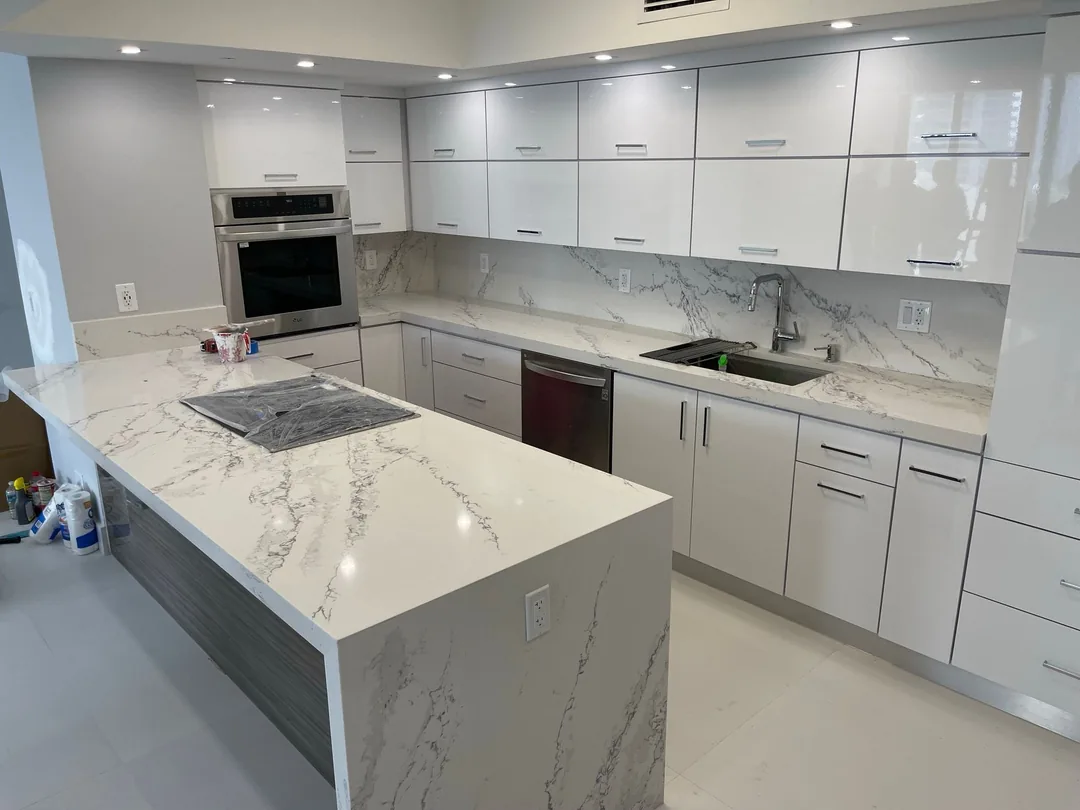
The best home remodeling company for your project is one that holds the right state license for the work, carries liability and workers’ compensation insurance, has finished projects like yours, and gives you a detailed written scope you can compare line by line. Size and advertising matter far less than who will actually be in your house and whose license is on the permit. This guide explains the types of remodeling companies, how national and local firms differ, and how to compare them without guessing.
Types of home remodeling companies
People searching for “top home remodeling companies” are usually comparing very different kinds of businesses. Knowing which type you are talking to tells you what to ask.
| Type | What they do best | What to check |
|---|---|---|
| General contractor (licensed) | Multi-room projects, structural changes, additions, permits | License class, who manages the site day to day |
| Design-build remodeler | Design and construction under one contract | Whether design fees are separate, who holds the license |
| Kitchen and bath specialist | Cabinets, counters, showers, tile, plumbing changes | Whether they can handle walls, electrical and permits |
| National franchise or brand | Standardized products such as tub liners, windows, siding | Local installer’s license and who services the work later |
| Retail installation program | Installing products bought from a store | Who the installer is and who handles problems |
| Handyman | Small repairs and punch-list items | Florida limits what unlicensed work can include |
A remodeling company and a general contractor can be the same business, but not always. Some firms sell and design the job, then hire a licensed contractor to build it. That can work, but you should know whose license is on the permit before you sign.
National brands vs local remodelers
National remodeling brands usually offer a standard product line, a set sales process and often a fixed price for a defined product. That can be a good fit for one-product jobs like a window package or a bathtub replacement.
Local remodelers tend to be stronger when the job is custom:
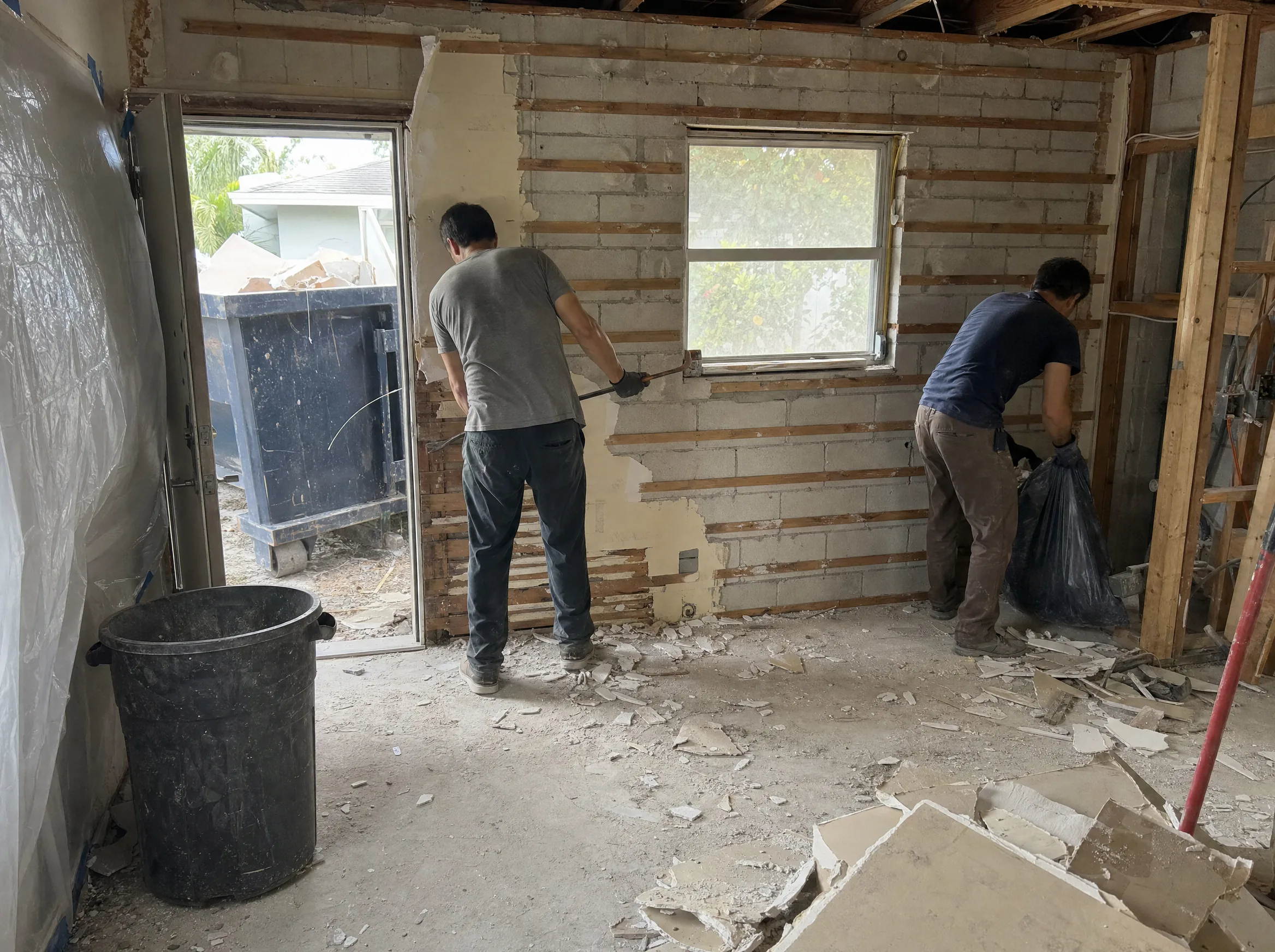
- Building stock. Central Florida homes are mostly slab-on-grade, many with concrete block exterior walls. Moving a kitchen sink or bathroom drain means cutting concrete, and a local crew plans for that.
- Older home issues. Polybutylene and galvanized water lines, cast iron drains under the slab and older electrical panels are common in older Orlando-area homes.
- Permit offices. Each city and county runs its own building department, and inside city limits it is usually the city, not the county.
- Climate. Humidity, termites and hurricane season (June 1 to November 30) affect materials, ventilation and scheduling.
- HOAs. Many master-planned communities require architectural review before exterior work.
Whichever you choose, you are really hiring the local crew and the license holder who will run your job. Ask who they are.
What to verify before you hire
License
In Florida, structural work, wall removal, additions and whole-home remodels require a state-licensed contractor:
- Certified General Contractor (CGC): any building type.
- Certified Building Contractor (CBC): commercial and residential up to 3 stories.
- Certified Residential Contractor (CRC): 1, 2 or 3 family homes up to 2 stories.
Plumbing, electrical and mechanical work need their own licensed trade contractors. Verify any license, its status and complaint history at myfloridalicense.com. Our Florida general contractor license guide explains each class.
Insurance
Ask for certificates of general liability and workers’ compensation sent from the insurance agent, not a photocopy from the salesperson.
Similar completed work
Ask for photos and addresses of projects like yours. A company that mostly installs windows is not the obvious pick for a kitchen with a moved wall.
Reviews, read the right way
Look for patterns across many reviews, not a single great or terrible one. Pay attention to how the company responds to problems, whether reviewers mention staying on schedule, and whether reviews describe projects similar to yours.
How to compare remodeling bids
Comparing bids is where most homeowners lose money, because the lowest total often includes the least work. Make every company bid the same scope, then compare line by line:
- Demolition and disposal: included, or extra?
- Permits: who pulls them, and are fees included?
- Allowances: an allowance is a placeholder budget for something you have not picked yet, such as tile or light fixtures. Low allowances make a bid look cheaper than it is.
- Electrical and plumbing: specific, or vague words like “as needed”?
- Drywall repair and paint: often left out of kitchen and bathroom bids.
- Exclusions: read this section first. It tells you what the price does not cover.
- Schedule: a start date and an estimated duration.
- Payment schedule: tied to completed milestones, not dates.
For more on gathering and reading quotes, see our guide to getting a free kitchen remodel estimate. The same method works for any room.
Questions to ask every remodeling company
- Whose license will be on the permit?
- Who will be on site day to day, and who is my main contact?
- Do you use your own crews, subcontractors, or both?
- What is excluded from this price?
- Which items are allowances, and how were they set?
- How are change orders priced and approved?
- What happens if you find damage behind the walls?
- How do you protect the rest of the house from dust?
- What does your payment schedule look like?
Red flags
- You are asked to pull the permit as an owner-builder so the company does not have to.
- A large cash deposit is requested before drawings or a permit exist.
- The price is a single number with no written scope.
- No physical business address, or the license name does not match the contract.
- High-pressure discounts that expire today.
- Reluctance to put verbal promises in writing.
Florida law gives you useful protections. Under Florida Statutes 489.126, a contractor who takes more than 10 percent of the contract price as a deposit must apply for permits within 30 days and start work within 90 days after the permit is issued, unless the contract provides otherwise as the statute allows. A Notice of Commencement must be recorded for improvements over $5,000.
What remodeling projects typically cost in Orlando
Typical Orlando-area planning ranges for 2026, installed:
| Project | Typical range |
|---|---|
| Kitchen cosmetic refresh (same layout) | $15,000 to $35,000 |
| Mid-range full kitchen remodel | $35,000 to $75,000 |
| Guest or hall bathroom, same layout | $12,000 to $25,000 |
| Full primary bathroom | $25,000 to $50,000 |
| Whole-home gut renovation | $100 to $250 per sq ft |
| Home addition | $200 to $400 per sq ft |
Ranges vary with size, materials, condition behind the walls and permit scope. Our home gut renovation cost guide covers whole-house projects in detail.
Planning a remodel in Orlando?
The fastest way to compare remodeling companies is to see how each one handles the first visit and the written scope that follows. Prime Construction is a licensed general contractor (CGC1535686) for home remodeling, kitchen remodeling and bathroom remodeling across Orange, Seminole, Osceola and Lake counties. We measure your space and provide a 3D design rendering and written estimate before you commit. Call (407) 404-3944 or request an estimate.