
Design Ideas
Kitchen Backsplash Trends 2026: Designs and Ideas That Last
Kitchen backsplash trends for 2026: slab backsplashes, handmade-look tile, vertical layouts, warm colors and texture, plus what each costs in Orlando.
By the Prime Construction team Updated October 13, 2026 7 min read
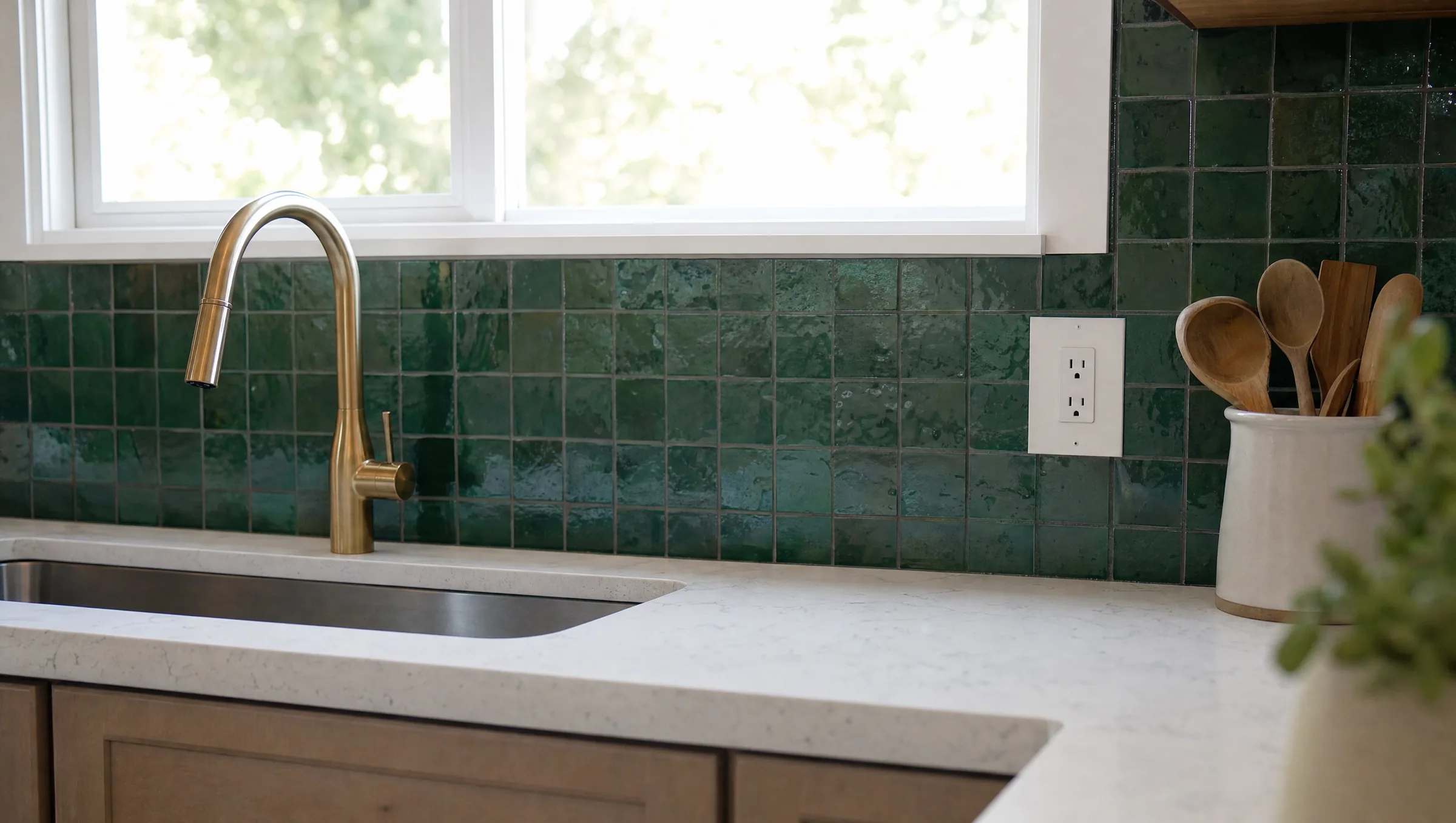
The strongest kitchen backsplash trends for 2026 are full-height slab backsplashes, handmade-look glazed tile, vertical and stacked layouts, warm earthy colors, and textured tile that adds depth without a busy pattern. The common thread is a calmer wall with fewer grout lines and more natural-looking material. Below are the 2026 backsplash ideas we see working in real kitchens, what each costs, and which older styles to skip if you want the room to age well.
Why backsplash design is changing in 2026
For about a decade the default backsplash was white 3x6 subway tile with gray grout. It still works, but homeowners planning a remodel in 2026 are asking for two things it does not deliver: warmth and fewer joints. Cabinets have moved toward wood tones, creams and muted greens, and countertops have moved toward softer veining. The backsplash is following.
Practical reasons matter too. Fewer grout lines mean less cleaning behind the range and sink, and a slab or large panel is easier to wipe down. In humid Central Florida kitchens, that is a real benefit, not just a style point.
2026 kitchen backsplash trends at a glance
| Trend | Look | Typical installed cost | Best for |
|---|---|---|---|
| Full-height slab | Countertop stone runs up the wall | Priced like countertops (quartz about $60 to $120 per sq ft) | Modern, transitional, high-end remodels |
| Handmade-look glazed tile | Uneven glaze, slight shade variation | Mid to high end of $20 to $60 per sq ft | Warm, traditional, coastal |
| Vertical or stacked subway | Long, thin tile laid straight up or in a grid | Low to mid range | Small kitchens, modern |
| Large porcelain panels | Big tiles or thin panels with few joints | Mid to high range | Low-maintenance kitchens |
| Textured or fluted tile | 3D surface, ribbed or pillowed | Mid to high range | Accent walls, range hoods |
| Patterned and checkerboard | Two-tone checks, painted or cement-look patterns | Low to mid range | Character kitchens, cottage style |
| Zellige-style and terracotta | Earthy, irregular, matte or glossy clay tones | Mid to high range | Warm and Mediterranean looks |
The full-height slab backsplash
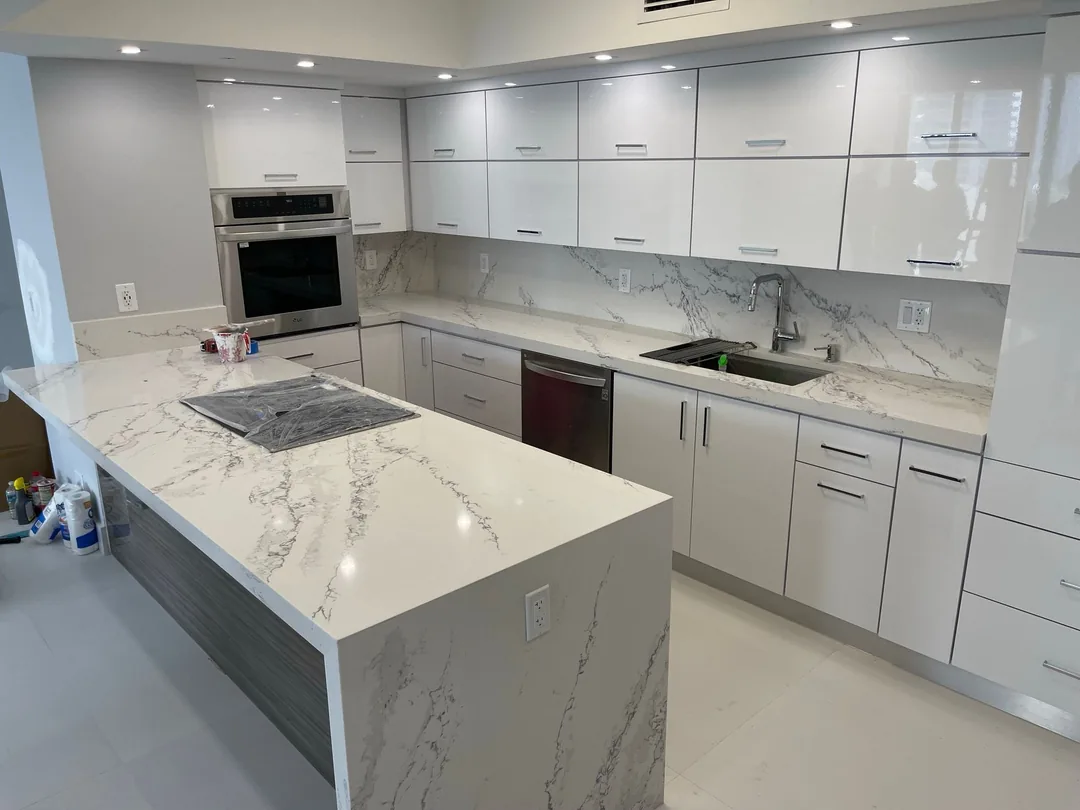
The slab backsplash is the defining 2026 look. Instead of tile, the countertop material continues up the wall, often to the underside of the upper cabinets, and sometimes all the way to the ceiling behind the range.
Why it works:
- No grout lines to stain behind the cooktop.
- The countertop and wall read as one surface, which makes even a small kitchen look intentional.
- Quartz and porcelain slabs are non-porous and easy to clean.
What to plan for:
- Cost. A slab splash is countertop material, so it costs more than most tile. See our countertop installation page for what affects slab pricing.
- Outlets. Every outlet has to be cut into the slab precisely, and box extenders are needed so the outlets sit at the right depth. We cover that in detail in our guide to tiling around outlets.
- Vein matching. If the slab has movement, decide early whether the backsplash vein should continue from the countertop. It affects how many slabs you need.
Budget versions: a 4 inch slab splash with tile or paint above, or a full slab only behind the range with tile on the rest of the wall.
Handmade-look and zellige-style tile
Tile with an irregular surface and a glaze that varies from piece to piece is one of the biggest 2026 kitchen backsplash ideas. It catches light differently across the wall and makes plain white or cream tile feel warm instead of clinical.
Tips:
- Order extra. Shade variation is the point, so blend tiles from several boxes as you set them.
- Use a tight grout joint and a grout color close to the tile. High-contrast grout fights the soft look.
- Genuine handmade clay tile is often more porous than porcelain and may need sealing. Ask for the care instructions before you buy.
Vertical, stacked and long subway layouts
Subway tile is not going away, it is being laid differently. The 2026 versions:
- Vertical stack. Tiles laid straight up in columns. It draws the eye up and makes a low-ceiling kitchen feel taller.
- Horizontal stack (grid). Tiles lined up with no offset. Clean and modern.
- Long and skinny. 2x8, 2x10 or 3x12 shapes instead of 3x6.
- Herringbone and chevron. Still popular, especially behind the range as a feature panel.
Stacked layouts show every crooked line, so the wall has to be flat and the first row has to be perfectly level. This is one place where layout skill matters more than tile price.
Warm colors replacing cool gray
The 2026 backsplash palette leans warm:
- Creams, warm whites and soft beige.
- Clay, terracotta and rust tones.
- Olive, sage and deeper greens.
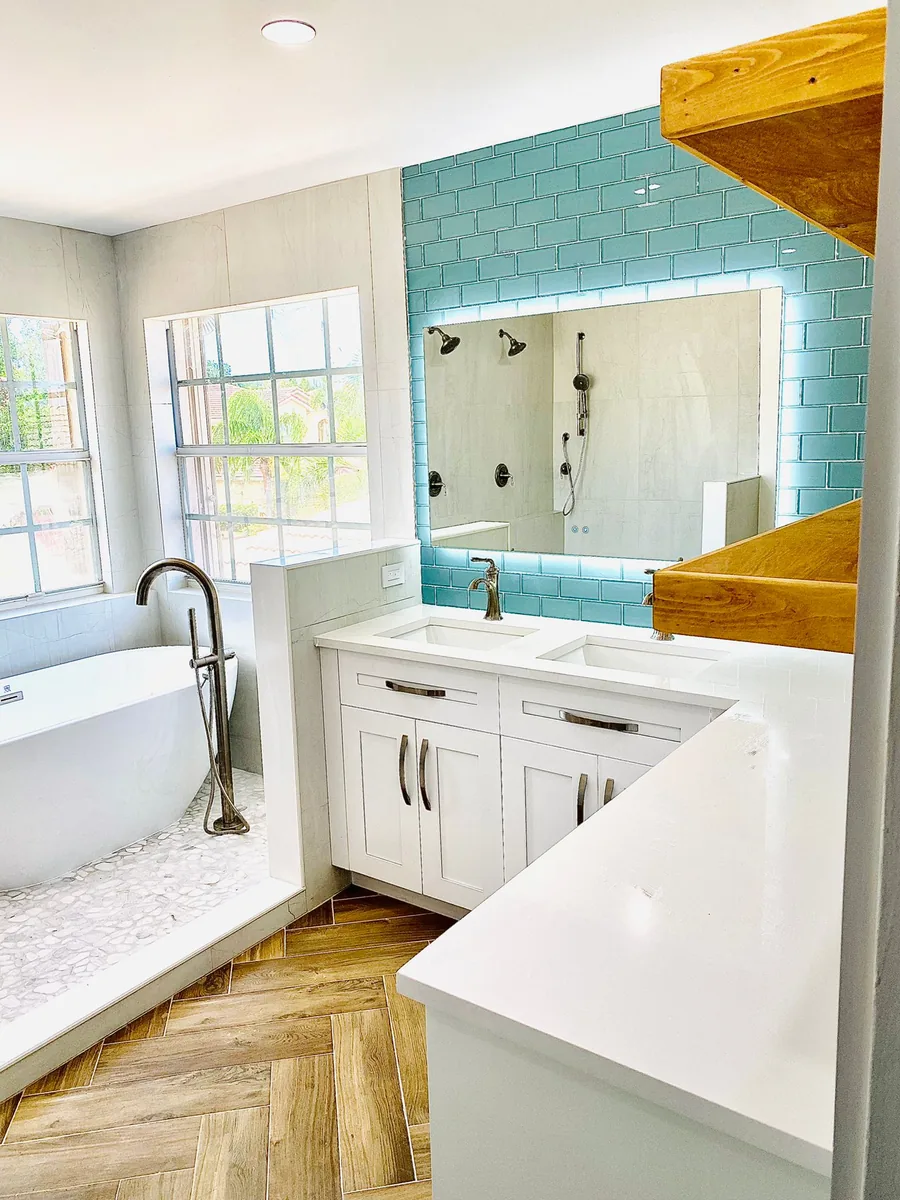
- Inky navy, teal and turquoise for a bolder look, usually in a glossy glaze that reflects light.
Cool gray tile with white cabinets is the look most often torn out now. If you want color and have white cabinets, see our ideas for a white kitchen with a bold backsplash.
Large porcelain panels and big tile
Large-format porcelain (24x48 inches and up) and thin porcelain panels give you a near-slab look at a lower cost than quartz in many cases, with marble, concrete or solid-color faces. They are dense, stain resistant and do not need sealing.
The tradeoff is installation. Large tile needs a very flat wall, full mortar coverage, and careful cuts around outlets and windows. It is not a beginner DIY tile.
Textured and fluted tile
Ribbed, fluted, pillowed and raised-pattern tiles add shadow and depth while staying in one color. They work best on a single feature wall or behind the range hood rather than wrapping the whole kitchen, because deep texture collects grease and is harder to wipe near the cooktop. A smooth glazed tile with subtle texture is the easier everyday choice.
Patterns, checkerboard and painted tile
Pattern is back, but used with restraint:
- Checkerboard in two soft tones (cream and green, white and clay) on a small wall.
- Painted or cement-look patterned tile behind the range as a framed panel.
- Mixed materials, such as a wood or metal shelf ledge set into a tile wall behind the range.
One rule keeps patterns from going wrong: if the backsplash is busy, the countertop should be quiet, and the reverse. A patterned tile against a heavily veined countertop is the most common design mistake we see.
Backsplash styles to avoid in 2026
These are the looks we replace most often, and the reason is usually that they date the kitchen:
- Thin glass mosaic strips running through plain tile.
- Small tumbled travertine with decorative listello borders.
- High-contrast dark grout on white subway that has stained unevenly.
- Busy tile fighting a busy countertop.
- A backsplash that stops at a random height, leaving a strip of painted wall under the upper cabinets.
How to choose a backsplash that will still look right in 2030
- Choose the countertop first. The backsplash should support it, not compete with it.
- Match the cabinet temperature. Warm cabinets (wood, cream) want warm tile; crisp white cabinets can take either.
- Decide where it stops. Running tile to the underside of the uppers is standard. On walls without upper cabinets, ending at a clean line such as a window head, a shelf, or the ceiling looks deliberate.
- Think about cleaning. Fewer grout lines behind the range and sink.
- See it in the room. Tile looks different under your lighting. Bring home samples, or ask for a 3D rendering before ordering.
Our kitchen remodeling process includes a 3D design rendering so you can see the backsplash with your cabinets and countertop before anything is ordered. If you plan to install the tile yourself, our backsplash installation guide walks through the steps.
What a 2026 backsplash costs in Orlando
Typical Orlando-area planning ranges for 2026, installed:
- Tile backsplash: about $20 to $60 per square foot. Ceramic and subway at the low end; glass, mosaic, handmade and natural stone at the high end.
- Typical kitchen total: most Orlando kitchens land around $1,000 to $3,000 for tile.
- Slab backsplash: priced like countertop material. Quartz countertops run about $60 to $120 per square foot installed, so a full-height slab wall costs noticeably more than tile.
What moves the number: square footage, how many outlets and windows have to be cut around, whether old tile and damaged drywall have to come off, and the tile pattern (herringbone and mosaics take more labor than straight lay). A written estimate after measuring is the only real number.
Planning a backsplash in Orlando?
If you are in Orange, Seminole, Osceola or Lake County and want to see a backsplash with your actual cabinets and countertop before you commit, Prime Construction offers in-home measuring and 3D design renderings, from Winter Park to Kissimmee. Call (407) 404-3944 or request an estimate.